From the Times of India
23 Dec 2007, 0113 hrs IST,
Mohammed Wajihuddin,TNN
Millions of Muslims from across the world circled the Kaba in Mecca last week in the footsteps of an ancient ritual. As the swarming white army of pilgrims closed around the clean-cut black stone, they declared aloud: " Labaik , Allah-huma-Labaik (Here, God, I am here)!"
Hundreds of miles away, near the Sufi poet Maulana Jalaluddin Rumi's tomb in Konya (Turkey), singer Ahmed Ozhan took the 2000-strong crowd on a virtual pilgrimage. Swinging to Ozhan's high-pitched devotional dirge, and accompanied by the plaintive sound of reed flutes, the audience repeatedly chanted "Labaik" a dozen times.
The crowd in Konya comprised collegians in tight jeans and skirts, parents with toddlers and groups of backpackers seeking solace in Sufi music. The scene defined Sufi Islam - inclusive, tolerant, appreciative of difference. This openness has also, in a way, characterised Turkey, a country squatting between Asia and Europe, which tossed the Caliphate aside in 1924 to choose a secular credo. A society which for the last eighty-odd years has abhorred the dogmatic interpretation of Islam even as it courageously embraced modernity.
But now, that fiercely secular republic is turning its face to Islamism. This fear received credence after the ban on headscarves in universities was lifted. The connotations have been endlessly debated in Istanbul, the country's cultural capital that snuggles by the Bosphorus.
After the ruling Justice and Development Party (AKP) lifted the ban on headscarves in universities (a ban on wearing scarves in government offices continues), Istanbul's secular elite sensed an impending danger: had Islamism entered their homes? Last week, celebrated Turkish pianist and composer Fazil Say triggered a storm when, in an interview to the German daily Suddeutsche Zeitung, he admitted, "The Islamists have won. We are 30 per cent while they are about 70 per cent. I am thinking about moving elsewhere."
As one of the ambassadors of the European Year of Intercultural Dialogue 2008, Fazil Say echoed the fears of secular friends when he lamented: "All the ministers' wives wear the headscarf." Say may be exaggerating but the fact is that the wives of both President Abdullah Gul and AKP's boss, Prime Minister Recep Tayyip Erdogan wear headscarves. The secularists have feared the return of this piece of cloth ever since Erdogan's AKP was returned to power in the July election with a landslide victory. The main opposition, the Republican People's Party (CHP), founded by Turkey's great moderniser Mustafa Kemal Ataturk who abolished the Caliphate, won just 21 per cent of the vote.
Say is not the only famous Turk who fears that the impending wave of ultra-nationalism might weaken the secular fabric of Turkish society. Earlier, Nobel laureate Orhan Pamuk, outraged at the killing of his friend, the Turkish-American journalist Hrant Dink in February this year, cried out: "I am furious at everyone and everything. I feel boundless shame."
But others in Istanbul dismiss these misgivings as unfounded. "The headscarf is just about freedom of choice. The government is not pandering to the Islamists," defends Erkam Tufan Aytav of the Journalists and Writers Foundation, a wing of the Movement of Volunteers. The Movement, an initiative started in the 1960s by scholar Fethullah Gulen, has dozens of educational and cultural branches in over 120 countries.
To back their argument, Aytav and his friends in the Movement cite examples from institutions (academic, television, business) where both scarved and non-scarved women work side by side. Yes, there are many scarves on the mosque-dotted streets of Istanbul but there are jeans and skirts and dreadlocks too. Just as the mellifluous azaans from the high minarets have not silenced the stirrings of the country's secular temperament the sartorial changes too, say optimists, will meld into rather than swamp lifestyles.
We found this catholicity at Camila Coskun, a school run by the Movement. Tucked away on one of the seven hills in Istanbul, the school houses over 100 children aged between seven and 16. Ayse Humeyra, a sixth-standard girl, is puzzled when asked if she will ever cover her head. "What's that?" asks the chubby-cheeked, bespectacled Ayse. Her classmate Elif Sena Soydan, slightly taller and more articulate, dreams of becoming a "rock star". A girl her age in any other Islamic society, say Saudi Arabia, would have invited severe reprimand from the custodians of faith for this "unIslamic" wish.
Mumbai's Islamic scholar Zeenat Shuakat Ali, who was part of our delegation, was elated at the moderate Islam practised in Turkey. "You must compare Turkey with Saudi Arabia. One glows in the benign influence of Sufism while the other staggers under the oppressive monarchy sanctioned by the clergy," says Ali, who sobbed openly at Rumi's decorated grave while saying her fateha (prayer in tribute).
Outside Istanbul's most famous landmark, the massive 17th-century Blue Mosque built by Ottoman king Sultan Ahmet, a tiny cafe serves delicious kebab and Turkish chai (black tea in small glasses). Two middle-aged men play chess at a corner table even as the young wife of the restaurateur takes the orders. Uninhibited by the stream of strangers, the jean-clad Muslim woman works hard, adding to the galloping economy of a country whose GDP has touched 7.6%. It is on the legs of women such as this that Turkey will hopefully stride into the European Union.
Saturday, December 29, 2007


Graphic novels explore the Middle East and Islam
New books from Joe Sacco, G. Willow Wilson, Lat and Anthony Lappé
American literati are shirking their duty to chronicle the nation's angst. The Iraq war is nearly five years old, and I've seen only two decent books of literary fiction on it. But comic books about the Middle East and Islam are a growing sub-genre. "Pride of Baghdad," "Exit Wounds," the long-running "DMZ" and the self-published series "Jobnik!" do what literary fiction doesn't: tell stories about what's troubling us.Two new graphic novels and one notable reprint do this too. The new edition of "Palestine," written in the early '90s, includes an essay by author Joe Sacco; happily, it still has the original introduction by the late scholar Edward Said.
In "Palestine," well-armed settler boys parade the streets with Mr. Natural's keep-on-truckin' stride, but they're not peddling free-spirited hoopla; they're paranoiacs on patrol. Sacco is influenced by R. Crumb, but in place of Crumb's sexual unease, he shows his discomfort at being a First-Worlder amid Third World poverty.
Honesty about ignoble things is a staple of underground comics, and Sacco brings that to his evolving view of the Middle East. "They get me sick," he says, showing his frustration at Palestinians. "Their big, sad eyes. . . . Their empty pockets. . . . I want to kick them." This says as much about the West as it does about Palestinians.
G. Willow Wilson's lyrically beautiful "Cairo" is a modern fantasy that draws equally on Egyptian folk tales and current cultural tensions. Her complex plot begins when a drug smuggler steals the home of the Djinn, or spirit, who protects the word meaning "East." To resolve the crisis, a young American training in Egypt to become a terrorist must learn to be a hero.
The author converted to Islam in her early 20s and is married to an Egyptian, but her novel's structure is pure U.S. superhero comic book. The relationship between the American and the Djinn is that of pupil to master. "Fear is never a noble weapon. Ever," the Djinn tells the would-be suicide bomber. The beautiful Israeli soldier Tova owes a bit to "Buffy the Vampire Slayer" -- and a bit more to superheroes Black Canary and Kitty Pryde. Yet M.K. Perker's art has none of the stiffness (or bulging muscles and breasts) associated with comic book characters but, rather, the sweet looseness of the girlier side of hip-hop illustration.
"Shooting War" by Anthony Lappé and illustrated by Dan Goldman is a political satire. "I'm a liar, a fake, and a fraud," says video-blogging journalist Jimmy Burns, speaking into a WebCorder as he's about to die on a Baghdad roof. Sen. John McCain is president, Iraq is in ruins and only a few journalists remain. The book has two villains: the high-tech occupying troops, who fight remotely using video-game controlled robots, and a Muslim mastermind who, sadly, looks slightly recycled from some James Bond movie. The "aha" moment comes when our antihero realizes that his convictions, or really the lack thereof, don't matter at all.
The exaggerations in "Shooting War" feel scarily unlike exaggerations. "The great capitalist experiment is dying here in the cradle of civilization," Burns declares. "Marx is dead. Instead you gave us [philosopher Thomas] Hobbes. Which would you prefer?" Sounds like something I wish I'd said.
Given the silence in prose fiction, I hope comic books are up to this challenge. They might be. Comics require terse language describing larger-than-life circumstances. (Speech bubbles are small; Ming the Merciless is over the top.) This fits the mess in the Middle East. The terseness cuts through the doublespeak -- lies hide better in 1,000 words than in 20. The extreme descriptions fit the chaos. Funny how it's literature that is escapist and comics that are facing things head on.
Laurel Maury is a New York-based writer and critic.
Women in Islam: Damsels in Distress?
It seems that Muslim women - particularly those living in western capitals- are destined to remain besieged by two debilitating discourses, which though different in appearance, are one in essence.
The first of these is conservative and exclusionist, sentencing Muslim women to a life of childbearing and rearing, lived out in the narrow confines of their homes at the mercy of fathers, brothers, and husbands. Revolving around notions of sexual purity and family honour, it appeals to religion for justification and legitimization.
The other is a "liberation" discourse that vows to break Muslim woman's bondage and free her of the oppressive yoke of an aggressive, patriarchal, and backward society. She is a mass of powerlessness and enslavement; the embodiment of seclusion, silence, and invisibility. Her only hope of deliverance from the cave of veiling and isolation lies in the benevolent intervention of this force of emancipation. It will save her from her hellishly miserable and bleak existence, to the promised heaven of enlightenment and progress.
It is a game of binaries that pits one stereotype against another: the wretched caged female Muslim victim and her ruthless jailer society against an idealized "west" that is the epitome of enlightenment, rationalism, and freedom. Those escapees who leave the herd are held up as living testimonies to the arduousness of transition from the twilights of tribe, religion and tradition, to the dawn of reason, individualism, and liberation.
There is no denying the manifold injustices that cripple the lives of many Muslim women and stunt their potential. But these appear in this condescending liberation narrative as representative of the condition of the millions of Muslim women around the world and exclusive to them. There are no colors, tones, or shades here. There are no living real women, urban or rural, educated or illiterate, affluent or poor, Turkish, Malaysian, or Egyptian - differences so crucial in defining women's life chances and shaping their situations.
All we know about this ghostly creature is her Muslim identity, as though she was entirely shaped and affected by religion and theology irrespective of social background, economic circumstances, political reality, or regional and local cultural traditions. Important as it is, legal and theological reform will on its own do little to improve the lot of impoverished, uneducated, or insecure women in Somalia, Iraq, or rural Bangladesh.
The narrative revolves around a dehistoricised, universal "Muslim woman"; a crushing model that oppresses flesh and blood Muslim women, denies them subjectivity and singularity, and claims to sum up their lives with all their vicissitudes and details from cradle to coffin. It reserves for itself the right to speak for them exclusively, whether they like it or not.
Representations of the Muslim woman serve a dual legitimizing function, at once confirming and justifying the west's narrative of itself, and of the Muslim other. The victimized Muslim woman is the lens through which Islam and Muslim society are seen. In medieval times she was cast as an intimidating powerful queen or termagant (like Bramimonde in the Chanson de Roland, or Belacane in Parzival) reflecting an intimidating powerful Muslim civilization. And when the power balance began to shift in Europe's favor in the 17th and 18th centuries, she was made to mirror her society's fallen fortunes. She turned into a harem slave, leading little more than a dumb animal existence, subjugated, inert, abject, powerless, and invisible. She is the quintessential embodiment of a despotic, deformed, and backward Islam.
It is Europe, later the west, that must penetrate her iron cage and break her shackles. It must save the victim and civilize her oppressors. The more victimized "the Muslim woman", the greater the need for the liberated west to liberate her. The noble intervention is for her and in her interest, not for the west, or its interests.
It was indeed no coincidence that a great many colonial officers and archivists devotedly recorded instances of barbarity among the colonized, practices like sati, the ban on widow marriage, or the practice of child marriage in India, or slavery and genital mutilation in Africa. Although these atrocities were not inventions, their chronicling had and still has a purpose: It provides the moral framework for intervention.
As a couplet by Torquato Tasso puts it,
And when her city and her state was lost,
Then her person lov'd and honor'd most.
But "love" and "honor" haven't exactly been the experience of Iraqi women when their cities fell under American occupation. Rights which took decades to secure have crumbled away in the space of months. From doctors, scientists, engineers or businesswomen, today they find themselves incarcerated in their homes unable to move around for fear of being kidnapped, raped, or assassinated. Those who escape the bombs and bullets of the occupying army, die at the hands of the Iraqi security forces and out of control extremist and sectarian militias which flourished since 2003, as Maggie O'Kane demonstrated in her moving piece on Cif yesterday. In the past three months 45 innocent women were murdered in cold blood in Basra.
The truth is that just as there is a military machine of hegemony, there is a discursive machine of hegemony. When armies move on the ground to conquer and subjugate, they need moral and ideological cover. It is this that gives the dominant narrative of the "Muslim woman" its raison d'etre.
No wonder then that the "Muslim woman" liberation warriors, the likes of Nick Cohen, Christopher Hitchens, and Pascal Bruckner, were the same people who cheered American/ British troops as they blasted their way through Kabul and Baghdad, and who will no doubt cheer and dance once more should Iran or Syria be bombed next. Soldiers shoot with their guns; they with their pens. They are hegemony's apologists. Without them the emperor stands naked.
Soumaya Ghannoushi is an academic and freelance writer. She is a researcher at the University of London.
Friday, December 28, 2007
Questions About Allah? Billboard May Help
From the Hartford Courant

 Drivers traveling west on I-84 are invited to turn east — toward Mecca.
A billboard promoting Islam near the Cheshire exit, and only a short distance from the construction of what will be the largest mosque in the state, encourages drivers to call a toll-free number to learn about the world's second largest religion.
The Connecticut chapter of the Islamic Circle of North America, which paid for the billboard, has sponsored similar billboards nationwide to inform non-Muslims about Islam and to correct negative stereotypes that emerged after the attacks of Sept. 11, 2001. Islamic Circle held its national convention in July at the Connecticut Convention Center in Hartford, an event attended by about 15,000 people.
"What we see in the news media and television is a picture of Muslims that is far from reality," said Muhammad Ahmad, a member of the Islamic Circle of North America and a doctor practicing internal medicine in Chicago. "Unless we go out and tell our neighbors who we are, there is no one who will correct the image."
Ahmad, who answers the 1-877-WHY-ISLAM phone lines, said he's received calls from curious priests, students, Muslims, non-Muslims and newspaper reporters. Some callers have even tried to convert him to their faith. Nationally, the group has mailed out about 3,000 translations of the Quran and other literature about Islam since it began its campaign years ago.
"We are giving out information. What people want to do with that information is their problem," Ahmad said.
A short distance off I-84 is the construction site for the new United Muslim Masjid of Waterbury. Naveed Khan, a member of the mosque, said the group is building a 24,000-square-foot structure because its current mosque on Prospect Street can't comfortably accommodate the growing number of Muslims in the Greater Waterbury area who pray there five times a day and gather for Islamic holidays.
In the last decade, attendance at the mosque has grown, along with the increasing numbers of Muslims moving into Greater Waterbury from Albania, Ghana and several other countries. The new mosque will have a community hall, a library, a gymnasium, a learning center, and a minaret tall enough to be seen from I-84. The new mosque also will allow its members to hold more outreach activities to educate the public about Islam and Muslims.
Khan said the mosque did not sponsor the billboard on I-84, which has a rendering of the new mosque and the words "Learn More About Your Neighbors." But its message is a tenet of Muslim faith, "Dawah," an Arabic term obligating Muslims to invite others to Islam.
"This is a national effort to establish some understanding of Islam, to start an interfaith dialogue," Khan said. "There is a great need to educate people about Islam after 9/11. As a community we need to address this issue."
New Ad Near 1-84 Promotes The Site Of What Will Become The State's Largest Mosque
By ANN MARIE SOMMA
Courant Staff Writer
December 23, 2007
A billboard promoting Islam near the Cheshire exit, and only a short distance from the construction of what will be the largest mosque in the state, encourages drivers to call a toll-free number to learn about the world's second largest religion.
The Connecticut chapter of the Islamic Circle of North America, which paid for the billboard, has sponsored similar billboards nationwide to inform non-Muslims about Islam and to correct negative stereotypes that emerged after the attacks of Sept. 11, 2001. Islamic Circle held its national convention in July at the Connecticut Convention Center in Hartford, an event attended by about 15,000 people.
"What we see in the news media and television is a picture of Muslims that is far from reality," said Muhammad Ahmad, a member of the Islamic Circle of North America and a doctor practicing internal medicine in Chicago. "Unless we go out and tell our neighbors who we are, there is no one who will correct the image."
Ahmad, who answers the 1-877-WHY-ISLAM phone lines, said he's received calls from curious priests, students, Muslims, non-Muslims and newspaper reporters. Some callers have even tried to convert him to their faith. Nationally, the group has mailed out about 3,000 translations of the Quran and other literature about Islam since it began its campaign years ago.
"We are giving out information. What people want to do with that information is their problem," Ahmad said.
A short distance off I-84 is the construction site for the new United Muslim Masjid of Waterbury. Naveed Khan, a member of the mosque, said the group is building a 24,000-square-foot structure because its current mosque on Prospect Street can't comfortably accommodate the growing number of Muslims in the Greater Waterbury area who pray there five times a day and gather for Islamic holidays.
In the last decade, attendance at the mosque has grown, along with the increasing numbers of Muslims moving into Greater Waterbury from Albania, Ghana and several other countries. The new mosque will have a community hall, a library, a gymnasium, a learning center, and a minaret tall enough to be seen from I-84. The new mosque also will allow its members to hold more outreach activities to educate the public about Islam and Muslims.
Khan said the mosque did not sponsor the billboard on I-84, which has a rendering of the new mosque and the words "Learn More About Your Neighbors." But its message is a tenet of Muslim faith, "Dawah," an Arabic term obligating Muslims to invite others to Islam.
"This is a national effort to establish some understanding of Islam, to start an interfaith dialogue," Khan said. "There is a great need to educate people about Islam after 9/11. As a community we need to address this issue."
Violence Extinguishes the Light of Islam
From the American Muslim
December 18, 2007
Violence Extinguishes the Light of Islam
by Dr. Hesham Hassaballa
"I Don't Want People To Say..."
In the Name of God, the Most Merciful, the Compassionate
"Messenger of God! Let me cut off this man's neck, for he is truly a hypocrite!"
This is what Umar ibn Al Khattab (r) used to say to the Prophet (pbuh) whenever someone would do something that would anger him. The Prophet (pbuh), however, would always restrain him, sometimes saying: "I do not want people to say that 'Muhammad kills his companions.'"
Yet, this was not because the Prophet (pbuh) was worried about his image or bad "public relations." The Prophet's (pbuh) mission was to bring as many people into the fold of faith as possible. He was sent as a "mercy unto humanity," and thus, it is unbecoming of that mercy to wantonly kill and murder. Yes, he fought battles, but whenever someone would wrong him, the Prophet (pbuh) would forgive.
After he was shamelessly expelled from the city of Ta'if, when its children stoned his feet to bloodiness, he asked God to forgive them, rather than crush them under the mountains as was offered to him by Angel Gabriel. After the battle of Uhud, he forgave those companions who directly disobeyed his order, even though that disobedience almost led to the murder of the Prophet (pbuh). A few years later, when he entered Mecca victorious, he gave the city a general amnesty, despite their bitter enmity towards him. He even forgave Hind bint 'Utbah, the woman who mutilated his uncle Hamza's body and tore out his liver after the battle of Uhud. The Qur'an says it best: "And it was by God's grace that you dealt gently with your followers: for if you had been harsh and hard-hearted, they would have broken away from you." (3:159)
This should set an example for us today, the followers of the Prophet Muhammad (pbuh), the ones who claim we love him more than any other human being on earth. As "Teddygate" raged in Sudan, and Muslims were calling for the head of Gillian Gibbons, I was discussing the situation with some acquaintances, and one of them seemed to explain away the call for violence by saying: "This just goes to show that, even in the Muslims who do not pray, love for the Prophet (pbuh) runs strong and deep in the hearts of the people."
This made me quite upset. If, truly, the Muslim loves the Prophet (pbuh), then he or she would make sure they would pray, fast, give charity, and the like (rather than kill), so as to honor the Prophet's (pbuh) enormous sacrifice to bring us Islam. Any Muslim, whether he prays or not, who shouts out death threats "defending the Prophet (pbuh)" is actually insulting the Prophet (pbuh) and all that he held dear throughout his life. If you truly love the Prophet (pbuh), then you should be like the Prophet (pbuh).
Yet, too many of us have abandoned the way of the Prophet Muhammad (pbuh), so much so that now, people all across the world are indeed saying: "Muhammad kills his companions." Or "kills the infidels"; or "kills the apostate"; or "kills the girl who 'shames the family honor'"; or - as recently happened in Canada - "kills the girl who does not wear her hijab."
Now, anyone with even an inkling of rational understanding, realizes that the violence done in Islam's name is not because of Islam, but rather in spite of Islam. Even the laughable incident of the teddy bear in Sudan had a context that was not well-explained in the Western press, although it does not excuse - in any way, shape, or form - the ridiculous reaction to the incident on the part of some Muslims.
In addition, there is a concerted effort by a small number of people to smear and malign the religion of Islam, to accentuate and highlight the sins of a tiny number of Muslims in order to tar the entire faith and its community across the world. It it these people who say, time and time again, that "Whenever a bomb explodes around the world, there is a Muslim behind it." Yes, many times that is true, but these people never try to explain why said Muslim decided to detonate that bomb.
Virtually no one, in fact, tries to explain the context of "Islamic terror," like the media tried to explain the context of the December 5 Omaha mall shooting, although, again, it does not excuse it. No, whenever a Muslim commits an act of violence, it is automatically assumed to be an act of terrorism, whose justification is to be found in Islam itself. Moreover, these critics neglect to mention that the overwhelming majority of the victims of "Islamic terrorism" are not "the infidels," but Muslims themselves. These terrorist criminals are not only the enemies of the West, but the enemies of Muslims as well.
Still, having said all of that, Muslims should not shy away from reminding themselves - and the world around them - how abhorrent violence against the innocent truly is in their religion; how Islam holds all human life - not just that of Muslims - as sacred, that all human beings have an inherent dignity that should never easily be violated; how the Prophet (pbuh) hated violence, and he only fought when he had absolutely no other choice; how Islam's sacred text continually reminds them to "never let the hatred of a people toward you move you to commit injustice."
As Muslims, we all know that the statement "Muhammad kills his companions" is a complete and utter falsehood, a vicious lie that is spread to poison the image of Islam across the globe. We all know that the television camera lens is much more attracted to the Muslims shouting "Death to Gillian Gibbons!" than to those Muslims who reached out in sympathy to her. We all know that 15-second sound bytes and flashes of angry Muslims marching in the street will never be able to tell the whole story in a 30-second news segment.
Nevertheless, the Prophet (pbuh) told us to "spread the message on my behalf, even if it is one verse." An enormous amount of ignorance about Islam is still quite prevalent, even among Muslims themselves, in our world today. The maligners of Islam (and the neo-Kharijite murderers) capitalize on this ignorance, trying to "extinguish the light of God with their mouths." We must do our part to dry these swamps of that ignorance. And even though it may seem to be a daunting task, let none of us despair. For, truly, "God will perfect His light, even if those who reject the truth may hate it."
Visit Dr. Hassaballa's site at http://drhassaballa.blogspot.com
December 18, 2007
Violence Extinguishes the Light of Islam
by Dr. Hesham Hassaballa
"I Don't Want People To Say..."
In the Name of God, the Most Merciful, the Compassionate
"Messenger of God! Let me cut off this man's neck, for he is truly a hypocrite!"
This is what Umar ibn Al Khattab (r) used to say to the Prophet (pbuh) whenever someone would do something that would anger him. The Prophet (pbuh), however, would always restrain him, sometimes saying: "I do not want people to say that 'Muhammad kills his companions.'"
Yet, this was not because the Prophet (pbuh) was worried about his image or bad "public relations." The Prophet's (pbuh) mission was to bring as many people into the fold of faith as possible. He was sent as a "mercy unto humanity," and thus, it is unbecoming of that mercy to wantonly kill and murder. Yes, he fought battles, but whenever someone would wrong him, the Prophet (pbuh) would forgive.
After he was shamelessly expelled from the city of Ta'if, when its children stoned his feet to bloodiness, he asked God to forgive them, rather than crush them under the mountains as was offered to him by Angel Gabriel. After the battle of Uhud, he forgave those companions who directly disobeyed his order, even though that disobedience almost led to the murder of the Prophet (pbuh). A few years later, when he entered Mecca victorious, he gave the city a general amnesty, despite their bitter enmity towards him. He even forgave Hind bint 'Utbah, the woman who mutilated his uncle Hamza's body and tore out his liver after the battle of Uhud. The Qur'an says it best: "And it was by God's grace that you dealt gently with your followers: for if you had been harsh and hard-hearted, they would have broken away from you." (3:159)
This should set an example for us today, the followers of the Prophet Muhammad (pbuh), the ones who claim we love him more than any other human being on earth. As "Teddygate" raged in Sudan, and Muslims were calling for the head of Gillian Gibbons, I was discussing the situation with some acquaintances, and one of them seemed to explain away the call for violence by saying: "This just goes to show that, even in the Muslims who do not pray, love for the Prophet (pbuh) runs strong and deep in the hearts of the people."
This made me quite upset. If, truly, the Muslim loves the Prophet (pbuh), then he or she would make sure they would pray, fast, give charity, and the like (rather than kill), so as to honor the Prophet's (pbuh) enormous sacrifice to bring us Islam. Any Muslim, whether he prays or not, who shouts out death threats "defending the Prophet (pbuh)" is actually insulting the Prophet (pbuh) and all that he held dear throughout his life. If you truly love the Prophet (pbuh), then you should be like the Prophet (pbuh).
Yet, too many of us have abandoned the way of the Prophet Muhammad (pbuh), so much so that now, people all across the world are indeed saying: "Muhammad kills his companions." Or "kills the infidels"; or "kills the apostate"; or "kills the girl who 'shames the family honor'"; or - as recently happened in Canada - "kills the girl who does not wear her hijab."
Now, anyone with even an inkling of rational understanding, realizes that the violence done in Islam's name is not because of Islam, but rather in spite of Islam. Even the laughable incident of the teddy bear in Sudan had a context that was not well-explained in the Western press, although it does not excuse - in any way, shape, or form - the ridiculous reaction to the incident on the part of some Muslims.
In addition, there is a concerted effort by a small number of people to smear and malign the religion of Islam, to accentuate and highlight the sins of a tiny number of Muslims in order to tar the entire faith and its community across the world. It it these people who say, time and time again, that "Whenever a bomb explodes around the world, there is a Muslim behind it." Yes, many times that is true, but these people never try to explain why said Muslim decided to detonate that bomb.
Virtually no one, in fact, tries to explain the context of "Islamic terror," like the media tried to explain the context of the December 5 Omaha mall shooting, although, again, it does not excuse it. No, whenever a Muslim commits an act of violence, it is automatically assumed to be an act of terrorism, whose justification is to be found in Islam itself. Moreover, these critics neglect to mention that the overwhelming majority of the victims of "Islamic terrorism" are not "the infidels," but Muslims themselves. These terrorist criminals are not only the enemies of the West, but the enemies of Muslims as well.
Still, having said all of that, Muslims should not shy away from reminding themselves - and the world around them - how abhorrent violence against the innocent truly is in their religion; how Islam holds all human life - not just that of Muslims - as sacred, that all human beings have an inherent dignity that should never easily be violated; how the Prophet (pbuh) hated violence, and he only fought when he had absolutely no other choice; how Islam's sacred text continually reminds them to "never let the hatred of a people toward you move you to commit injustice."
As Muslims, we all know that the statement "Muhammad kills his companions" is a complete and utter falsehood, a vicious lie that is spread to poison the image of Islam across the globe. We all know that the television camera lens is much more attracted to the Muslims shouting "Death to Gillian Gibbons!" than to those Muslims who reached out in sympathy to her. We all know that 15-second sound bytes and flashes of angry Muslims marching in the street will never be able to tell the whole story in a 30-second news segment.
Nevertheless, the Prophet (pbuh) told us to "spread the message on my behalf, even if it is one verse." An enormous amount of ignorance about Islam is still quite prevalent, even among Muslims themselves, in our world today. The maligners of Islam (and the neo-Kharijite murderers) capitalize on this ignorance, trying to "extinguish the light of God with their mouths." We must do our part to dry these swamps of that ignorance. And even though it may seem to be a daunting task, let none of us despair. For, truly, "God will perfect His light, even if those who reject the truth may hate it."
Visit Dr. Hassaballa's site at http://drhassaballa.blogspot.com
Bhutto was the first woman to be a prime minister of the Muslim world
Born on June 21, 1953 in Karachi, Mohtarma Benazir Bhutto was the
first woman to be a Prime Minister of the Muslim world.
first woman to be a Prime Minister of the Muslim world.
She was twice elected Prime Minister of Pakistan. The charismatic
Bhutto was first elected Prime Minister of Pakistan in 1988 at the age
35. Benazir Bhutto was one of the youngest chiefs of state in the
world. She was re-elected in 1993 but was dismissed three years later
by then President Farooq Leghari. Benazir Bhutto was the eldest child
of former Prime Minister Zulfikar Ali Bhutto and Begum Nusrat Bhutto,
who was of Kurdish-Iranian origin. Her paternal grandfather was Sir
Shah Nawaz Bhutto, a Sindhi and a key figure in Pakistan's
independence movement. After completing her early education in
Pakistan, Ms Bhutto pursued her higher education in the United States.
From 1969 to 1973, she attended Radcliff College, and then Harvard
University, where she obtained a B.A. Degree in comparative
government. Between 1973 and 1977, Ms Bhutto studied philosophy,
politics, and economics at Lady Margaret hall, oxford. Benazir had
returned to Pakistan on October 18 this year after ending her self
imposed exile since in 1998.
Countries Condemn Bhutto Killing
By ANDREW O. SELSKY
Associated Press Writer
Associated Press Writer
From Moscow to Washington to New Delhi and points in between, dismay
and condemnation poured forth Thursday over the assassination of
Pakistani opposition leader Benazir Bhutto, along with concern for the
stability of the volatile region. World leaders lauded her bravery and
commitment to democratic reform.
The U.N. Security Council voted unanimously to condemn the killing.
In India, which has fought three wars against Pakistan, Prime Minister
Manmohan Singh said Bhutto is irreplaceable, and noted she had striven
to improve relations between the two nuclear-armed countries.
"I was deeply shocked and horrified to hear of the heinous
assassination," Singh said. "In her death, the subcontinent has lost
an outstanding leader who worked for democracy and reconciliation in
her country."
In Texas, a tense-looking President Bush demanded that those
responsible be tracked down and brought to justice.
"The United States strongly condemns this cowardly act by murderous
extremists who are trying to undermine Pakistan's democracy," Bush
told reporters at his ranch in Crawford. "We stand with the people of
Pakistan in their struggle against the forces of terror and
extremism."
He later spoke briefly by phone with Pakistan President Pervez
Musharraf but White House spokesman Scott Stanzel said he had no
details.
Afghanistan's President Hamid Karzai, who met Bhutto earlier on
Thursday in Islamabad, said he was "deeply pained" by the
assassination of "this brave sister of ours, a brave daughter of the
Muslim world."
"She sacrificed her life, for the sake of Pakistan and for the sake of
this region," he said. "I found in her this morning a lot of love and
desire for peace in Afghanistan, for prosperity in Afghanistan and ...
Pakistan."
Iraqi President Jalal Talabani condemned Bhutto's killing and said
Pakistan had lost a courageous politician who stood firm against "the
forces of darkness and terror."
"We in Iraq know (the impact) of the blind terror that has become a
global plague, killing innocents and shaking the foundations of
stability" in nations, Talabani said in a statement released by his
office.
In a letter to Musharraf, French President Nicolas Sarkozy called the
attack an "odious act" and said "terrorism and violence have no place
in the democratic debate and the combat of ideas and programs."
Sarkozy said Bhutto had paid "with her life her commitment to the
service of her fellow citizens and to Pakistan's political life" and
urged Pakistan's elections be held as scheduled on Jan. 8.
Bhutto, a former two-time prime minister of Pakistan, was killed in a
suicide attack in Rawalpindi just 10 weeks after she returned to her
homeland from eight years in exile. A suicide attack on her homecoming
parade killed more than 140 people. The articulate, poised 54-year-old
had lashed out at the spread of Islamic extremism as she campaigned
for next month's parliamentary elections.
The United States had been at the forefront of foreign powers trying
to arrange reconciliation between Bhutto and Musharraf, who under
heavy U.S. pressure resigned as army chief and earlier this month
lifted a state of emergency, in the hope it would put Pakistan back on
the road to democracy.
U.N. Secretary General Ban Ki-moon called for "all Pakistanis to work
together for peace and national unity."
The Vatican spokesman, the Rev. Federico Lombardi, said Pope Benedict
XVI was immediately informed of the "terrible news."
"One cannot see signs of peace in this tormented region," Lombardi said.
In Britain, where Bhutto had attended Oxford University, Prime
Minister Gordon Brown said she "risked everything in her attempt to
win democracy in Pakistan and she has been assassinated by cowards who
are afraid of democracy."
"The terrorists must not be allowed to kill democracy in Pakistan, and
this atrocity strengthens our resolve that the terrorists will not win
there, here, or anywhere in the world," Brown said.
EU foreign policy chief Javier Solana said the attack "is clearly
aimed at destabilizing the country." He beseeched Pakistanis to
refrain from violence.
Rep. Patrick Kennedy, D-R.I., was in Pakistan and on his way to dinner
with Bhutto when he heard about the attack. Kennedy told The
Associated Press in a telephone interview that Pakistanis are setting
fires in the countryside "that are lighting up the sky tonight."
Venezuelan President Hugo Chavez told reporters in Caracas: "We
received the news with great pain, and I hope this is never repeated
ever again, anywhere."
Calling for peace, he said, "Whoever loses respect for the life of a
human being loses respect for the life of humanity."
German Chancellor Angela Merkel said the "cowardly terrorist attack
... also targets the stability and democratic process of Pakistan."
The Chinese the Foreign Ministry's spokesman, Qin Gang, said in a
statement posted on the ministry's Web site: "We strongly condemn this
terrorist act. We are shocked by Benazir Bhutto's assassination and
extend our condolences to families of Bhutto and other victims."
In Moscow, Russian President Vladimir Putin sent a telegram to
Musharraf saying Bhutto's murder is "a challenge thrown down by forces
of terrorism not only to Pakistan but also to the entire international
community," Russian news reports said.
Israeli President Shimon Peres said Bhutto "feared nothing and served
her country with valor."
Visiting U.S. lawmakers were to meet with Bhutto
By LAURIE KELLMAN
Associated Press
Published on: 12/27/07
Associated Press
Published on: 12/27/07
WASHINGTON — Two U.S. lawmakers scheduled to meet Thursday with former
Pakistani Prime Minister Benazir Bhutto and President Pervez Musharraf
were advised to leave the country after Bhutto's assassination.
Sen. Arlen Specter, R-Pa., said in a telephone interview from his
Islamabad hotel room that he and Rep. Patrick Kennedy, D-R.I., were to
dine with Musharraf and meet later in the night with Bhutto.
He said he heard about the attack on Bhutto as he was dressing for the
dinner with Musharraf.
"Our foreign policy had relied on her presence as a stabilizing
force," Specter said, emotionally describing her death as "a real,
real, real shock."
"I knew her personally .... She was, as you know, glamorous, beautiful
smart," he said. "Her loss is a setback. But you have to face what is.
And now, without her, we have to regroup."
Kennedy said he was just leaving his hotel room for the dinner when
someone advised him to check the television for news about Bhutto.
"I couldn't believe it," Kennedy said in a telephone interview from
Pakistan. "You could really feel the tragedy of this loss because
Bhutto really represented hope here for so many people."
Bhutto was shot to death Thursday in a suicide attack that also killed
at least 20 others during a campaign rally in Rawalpindi. She served
twice as Pakistan's prime minister between 1988 and 1996 and had
returned to Pakistan from an eight-year exile Oct. 18 to seek the
office again.
After learning that she was dead, Specter, Kennedy and Anne Patterson,
the U.S. ambassador to Pakistan, laid flowers under Bhutto's
photograph at her campaign headquarters in what they described as an
unsettling atmosphere. Specter said he felt apprehensive about being
an American there out at night.
"They were crying and they were sobbing," Specter said, describing the
people there. "It's a night reminiscent of Kennedy, Robert Kennedy's
assassination."
Patrick Kennedy, son of Sen. Edward Kennedy, D-Mass., and Robert
Kennedy's nephew, said they laid the flowers at Bhutto's headquarters
because it was unsafe to do so at her residence.
Both lawmakers said turmoil was engulfing the country.
"Her death really dashed the hope of many here in Pakistan and that's
why there's so much disillusionment and anger being vented through
these protests that are lighting up the sky tonight as people set
fires all over the countryside," Kennedy said.
The lawmakers said they were cutting short their trip by a day on the
advice of the State Department.
News teams mobilize to cover Bhutto killing
News teams mobilize to cover Bhutto killing
Dec 28, 2007

It was just two months ago that Curry interviewed the former Pakistani prime minister about her return from self-imposed exile and her drive toward the Jan. 8 parliamentary elections to help bring the country back to democracy. Looking back Thursday afternoon while preparing parts of the interview to air on "NBC Nightly News," Curry couldn't help but be struck by how matter-of-fact Bhutto was about the possibility that she could be killed.
"She knew there were many threats to her life," Curry said.
After speaking at a campaign rally in Rawalpindi, those fears became reality Thursday when Bhutto, 54, was shot and killed by a suicide attacker who then blew himself up. The assassination shattered the postholiday calm that had settled on the New York-based TV news divisions that quietly are gearing up for next week's Iowa caucus.
Suddenly, Pakistan -- where there are only a handful of employees for the U.S.-based networks -- pushed U.S. campaign news off the cable news channels as the networks struggled to bring the developing story to American viewers. CNN was the first network to confirm the story, working off legwork from producer Mohsin Naqvi, who broke the story at 7:21 a.m. EST after attending the rally and hearing an explosion.
"He was right on it from the start to the end," said Parisa Khosravi, CNN International senior vp newsgathering.
Naqvi isn't alone. ABC News' Gretchen Peters is stationed in Pakistan for the network, which also is sending other correspondents, including "World News Sunday" anchor Dan Harris. NBC is sending correspondents Michelle Kosinski from New York and Ned Colt from London. Both hold current Pakistani visas, which NBC News newsgathering vp David Verdi said is a traditional precaution for hot-button regions.
NBC News constantly obtains visas "for people in our organization in the anticipation there would be breaking news in a country that would take months to get one otherwise," he said.
Fox News Channel moved into action immediately, bringing back many of its A-team who were on Christmas vacation. "The Fox Report" correspondent Shepard Smith anchored coverage from Memphis because he couldn't return to New York fast enough. Greta van Susteren hosted "On the Record" from Florida, where she is vacationing. Bill O'Reilly was scheduled to call into "The O'Reilly Factor" for a few minutes at the beginning of the hour from out of the country.
MSNBC had "Countdown" host Keith Olbermann return early from vacation to cover the story.
CBS will have Richard Roth covering the assassination and its aftermath, with Sheila MacVicar en route to Pakistan to be on the ground for "The Early Show." ABC has Nick Watt covering for "Good Morning America," which also will produce a nontraditional obituary, executive producer Tom Cibrowski said.
"It's the story of Benazir Bhutto, controversial and incredibly brave," he said. "Our viewers know she was standing up for something she believed in, and that makes a difference in the way we're covering it."
Looking back on her interview, Curry wonders whether she had been too tough on Bhutto while questioning her about why she was doing what she was doing after already having done so much for her country.
"With her eyes wide open, she expressed a deep love for her country and a wish for some day that it would become a democracy again," Curry said. "I cannot say she did not expect this. I think she did expect to be attacked again. She said she put her faith in God."
Curry said the interview took place after Bhutto had a wrenching meeting with the widows and family members who had lost loved ones in the previous attempt on her life. The former prime minister realized that she didn't have any lipstick and was reluctant to go on camera without it. Curry instinctively offered her lipstick tube. Bhutto accepted and readied herself for the camera.
The situation in Iraq and elsewhere has taught the networks to be careful of their own security. Although the journalists will not travel in Pakistan with the same level of protection required working in Iraq, being careful is at the top of the priority list.
Verdi said that Pakistan has modern cities and none of the threatening look of Iraq and that it's easy to let one's guard down.
"It's a very volatile situation, and we're very worried about the potential for violence on the ground," he said. "We're going to be very conscious of security."
Khosravi agreed and said that Naqvi told her Thursday night that he'd never seen his homeland so volatile and in such a state of shock as it is after the assassination.
"Safety is a big concern on the ground," Khosravi said.
That extends not only to rioting but also to Bhutto's funeral, which is scheduled for Friday in her hometown of Larkana, where her father and two brothers also are buried.
Benazir Bhutto's Funeral Arrangements
Benazir's body to be shifted to Larkana today |
| Zardari, kids back home to attend funeral | Govt tightens security in city |
| The Post Report |
| LARKANA: Benazir Bhutto's body would be brought today (Friday) to Larkana for burial besides her father Zulfikar Ali Bhutto's grave in Garrhi Khuda Bukhsh. The graves of Shahnawaz Bhutto and Mir Mutraza Bhutto, brothers of Benazir, are also there. Many of Benazir's close relatives might not attend her funeral. |
Thursday, December 27, 2007
Bhutto Mourned Around the World
Bhutto mourned at home-in-exile in Dubai
4 hours ago
DUBAI (AFP) — Supporters of slain Pakistani opposition leader Benazir Bhutto in Dubai, where she made her base through eight years of exile, were left in shock Thursday following her assassination two months after she returned home.
"I'm so sad. I feel that my own sister is dead," said Zubeir Bashir, Middle East spokesman for Bhutto's Pakistan People's Party.
"This is a big tragedy for Pakistan. This is a very big shock for us," he told AFP by telephone as he headed to the Bhutto family home in Dubai.
Bashir said that members of Bhutto's family who had remained in the Gulf emirate after her return to her homeland in October were already on their way to Pakistan.
Her husband Asif Zardari was urgently awaiting a flight back to help make the funeral arrangements, Bhutto's spokesman Farhatullah Babar told Pakistani state television.
Dozens of cars were seen outside Bhutto's home in an upmarket neighbourhood of the city on Thursday evening while police deployed to try to prevent press photographers from taking pictures.
The leader of Bhutto's party in the United Arab Emirates, Mohammed Akran Farooqi, choked with emotion as he tried to express his grief over her killing in a suicide attack in the Pakistani city of Rawalpindi.
"I can't say anything... I'm totally upset," he said between sobs.
Bhutto had received threats that suicide bombers would be sent to kill her before she returned home, but on the eve of her departure from Dubai in October she insisted she was undeterred.
"I don't believe that a true Muslim will make an attack on me... Islam forbids suicide bombings," she told reporters.
The UAE, which hosted her during her years of exile, condemned the assassination, along with governments across the Middle East.
"The UAE has been tormented by this huge loss, which did not hit Pakistan only, but also affected the UAE," Foreign Minister Sheikh Abdullah bin Zayed al-Nahayan said in a statement carried by the official WAM news agency.
"Words fail to express our condemnation of this criminal act and our pain for the loss of Benazir Bhutto," he said.
The 22-nation Arab League condemned what it called a "heinous terrorist crime."
The 57-nation Organisation of the Islamic Conference condemned the "outrageous and brutal murder."
The bloc's secretary general Ekmeleddin Ihsanogulu said the killing was "an attack on stability and peace in Pakistan and an open provovation aiming at derailing the efforts of unity, reconciliation and democratic process."
Pakistan's western neighbour Iran condemned "the criminal action today in Rawalpindi."
"The Pakistan government should use all efforts to identify the terrorist group which caused this incident and punish them to prevent terrorist groups from finding opportunities to undertake such actions again," foreign ministry spokesman Mohammad Ali Hosseini told state television.
Iran's regional archfoe Israel, which has no diplomatic relations with Muslim-majority Pakistan, also spoke out against the killing.
"Benazir Bhutto was a courageous woman who did not hide her ideas, did not know fear and served her country with courage," President Shimon Peres said said in a statement.
"I had the opportunity to meet her on several occasions and she expressed great interest in what was happening in Israel during those encounters and said she hoped to visit once she returned to power."
Egyptian Foreign Minister Ahmed Abul Gheit urged Pakistani politicians "to overcome their differences in this critical period to guarantee the security and stability" of Pakistan.
He called on them to fight "the forces of extremism and terrorism which want to disturb stability in a way that would have an impact not only on the future of Pakistan but on that of the entire region."
4 hours ago
DUBAI (AFP) — Supporters of slain Pakistani opposition leader Benazir Bhutto in Dubai, where she made her base through eight years of exile, were left in shock Thursday following her assassination two months after she returned home.
"I'm so sad. I feel that my own sister is dead," said Zubeir Bashir, Middle East spokesman for Bhutto's Pakistan People's Party.
"This is a big tragedy for Pakistan. This is a very big shock for us," he told AFP by telephone as he headed to the Bhutto family home in Dubai.
Bashir said that members of Bhutto's family who had remained in the Gulf emirate after her return to her homeland in October were already on their way to Pakistan.
Her husband Asif Zardari was urgently awaiting a flight back to help make the funeral arrangements, Bhutto's spokesman Farhatullah Babar told Pakistani state television.
Dozens of cars were seen outside Bhutto's home in an upmarket neighbourhood of the city on Thursday evening while police deployed to try to prevent press photographers from taking pictures.
The leader of Bhutto's party in the United Arab Emirates, Mohammed Akran Farooqi, choked with emotion as he tried to express his grief over her killing in a suicide attack in the Pakistani city of Rawalpindi.
"I can't say anything... I'm totally upset," he said between sobs.
Bhutto had received threats that suicide bombers would be sent to kill her before she returned home, but on the eve of her departure from Dubai in October she insisted she was undeterred.
"I don't believe that a true Muslim will make an attack on me... Islam forbids suicide bombings," she told reporters.
The UAE, which hosted her during her years of exile, condemned the assassination, along with governments across the Middle East.
"The UAE has been tormented by this huge loss, which did not hit Pakistan only, but also affected the UAE," Foreign Minister Sheikh Abdullah bin Zayed al-Nahayan said in a statement carried by the official WAM news agency.
"Words fail to express our condemnation of this criminal act and our pain for the loss of Benazir Bhutto," he said.
The 22-nation Arab League condemned what it called a "heinous terrorist crime."
The 57-nation Organisation of the Islamic Conference condemned the "outrageous and brutal murder."
The bloc's secretary general Ekmeleddin Ihsanogulu said the killing was "an attack on stability and peace in Pakistan and an open provovation aiming at derailing the efforts of unity, reconciliation and democratic process."
Pakistan's western neighbour Iran condemned "the criminal action today in Rawalpindi."
"The Pakistan government should use all efforts to identify the terrorist group which caused this incident and punish them to prevent terrorist groups from finding opportunities to undertake such actions again," foreign ministry spokesman Mohammad Ali Hosseini told state television.
Iran's regional archfoe Israel, which has no diplomatic relations with Muslim-majority Pakistan, also spoke out against the killing.
"Benazir Bhutto was a courageous woman who did not hide her ideas, did not know fear and served her country with courage," President Shimon Peres said said in a statement.
"I had the opportunity to meet her on several occasions and she expressed great interest in what was happening in Israel during those encounters and said she hoped to visit once she returned to power."
Egyptian Foreign Minister Ahmed Abul Gheit urged Pakistani politicians "to overcome their differences in this critical period to guarantee the security and stability" of Pakistan.
He called on them to fight "the forces of extremism and terrorism which want to disturb stability in a way that would have an impact not only on the future of Pakistan but on that of the entire region."
‘We Are Neither Men Nor Women, but Muslims Like Anyone Else’
From ArabNews
'We Are Neither Men Nor Women, but Muslims Like Anyone Else'
Siraj Wahab, Arab News

Haji Saleem (Salma)
MINA, 20 December 2007 — They are neither men nor women. In their devotion to God, however, they are second to none. There are no precise figures as to how many of them are performing Haj this year but according to those who are familiar with them, they have been coming here for years. Since they list themselves as men when applying for Haj visas, there is no definite way of ascertaining their exact number. They are like a drop in the ocean here and would have gone unnoticed but for their mannerisms and the singsong way of talking.
This correspondent bumped into four eunuchs ("Aghawaat" in Arabic) here yesterday. All of them were from Bhopal in India. They were a bit shy initially but were later more than eager to narrate their story of the pilgrimage. One of them, Haji Saleem, identified himself as the group's leader and he did most of the talking. The others nodded their heads, affirming their leader's statements.
"You are right, we are neither men nor women. 'Hamara dono me shumar nahi hota.' We are born this way," he said. "This is my second Haj. I was here in 1998. That is why I have added the title 'Haji' to my name. I am revered in my community and they look up to me with awe and whatever I say is taken as a command."
Back in India, however, Haji Saleem is actually known by a female name, Salma. The other three gave their names as Abdul Rasheed (better known as Mumtaz), Abdul Shabbir (Sanno) and Haji Zahoor (Zohra). They laugh and grin sheepishly when giving their actual community names. "We are known in Bhopal's Islampur-Bhudhwara area as Salma, Mumtaz, Sanno and Zohra. Those are our real names," said Haji Saleem.
Haji Saleem said they have had no problems during Haj. "Nobody bothered us nor did we bother anybody. In Makkah, however, the four of us were put up in a room with some other people. They were not comfortable with us so they asked the organizers to shift us to some other room. We were then given a separate room. Fair enough," said Haji Saleem.
Since they are neither men nor women, who do they pray with? "We respect women. That is why we don't go into their section. Islam gives us permission to pray alongside people of both sexes. For the sake of practicality and counting, we identify ourselves as men and therefore here at Haj we wear what men wear. Back home, however, we are always in women's clothing," said Haji Saleem. "Also, when we die we are given the last body wash by men. That is also a key reason for us to be counted among men rather than women."
What does Islam say concerning eunuchs and the pilgrimage? Prominent scholar and Arab News' Islamic Affairs Editor Adil Salahi said: "If the eunuch is a man who has been castrated, all the rulings concerning men apply to him. If it is a question of a person being created thus, then whatever the person appears to be applies to him. If the eunuch says he is a man, or if he says he is a woman, Islam accepts this from him in things which do not give him material advantage. As far as pilgrimage, the eunuch is required to offer the pilgrimage just as everyone else. If the eunuch's form suggests he is a man, such as having hair in the face, then he is a man. If the form suggests a woman, such as having breasts, then she is a woman."
Eunuchs were once very popular and sought-after in the harems of Eastern kings. They are often mentioned in the tales of The Arabian Nights. And so one comes repeatedly across Khwaja Sara, the major domo, in the harem of the legendary monarch Haroon Al-Rashid. Eunuchs are basically castrated men and are generally considered to be harmless and innocuous with no possibility of violating the modesty of women.
According to Haji Saleem, there are 150 members of his community in Bhopal. "We all live together. We share our joys and sorrows. We are Muslims like anyone else. We pray five times a day. We don't have separate mosques. We go to the ones that every Muslim goes to. We adopt children, but only baby girls. We don't adopt baby boys. We take care of these baby girls and then marry them off. Some of them came to see us off at Bombay airport," said Haji Saleem.
Haji Saleem said that Hindus in India take good care of them. "They treat us with a lot of respect. We are invited to their homes whenever they are blessed with a baby boy. They even invite us during weddings and to celebrate the season of harvest. Their celebrations are not considered complete without our presence. We sing and dance and make merry. They give us a lot of money. We are sometimes invited to Muslim homes as well, but they treat us with contempt. They forget that we are the way we are because God's willed it that way. This is not something that is our choice. Interestingly, all of us in this community of eunuchs in Bhopal are Muslims," said Haji Saleem.
All Muslims? "Yes, even those who belong to other faiths and are born like us, when they join our community, we ask them first to embrace Islam. We make them recite the Kalima (Shahada) and they are given Muslim names."
After returning home from Haj, will they continue singing and dancing and will their lifestyle change? Haji Saleem had an interesting answer. "Those who perform Haj two times attain the status of a 'mukhia' or a guru. They are not required to wear women's clothing. They are not allowed to sing and dance. But those who have performed Haj only once will go back to their business but only after a period of two months."
Haji Saleem said he had no regrets about life. "'Hame Allah se aur zindagi se koyee shikayat nahi hai.' We have no complaints. There must be a reason why God created us this way. Science has reached such a stage that people have sex-change operations. Men become women and vice versa. We are happy the way we are."
Haji Saleem said they were extremely delighted to be here for Haj. "Of course, we are very happy. We cannot tell you how much. Yes, there were a lot of fears when we boarded the plane. But once we were here, all our worries vanished. Just the sight of the holy city and Holy Kaaba was enough to make us feel content. Our prayers are with the entire Muslim community. May Allah give every Muslim the opportunity to perform Haj and to see the glorious Kaaba."
"Aameen," said the other three eunuchs in unison.
'We Are Neither Men Nor Women, but Muslims Like Anyone Else'
Siraj Wahab, Arab News
Haji Saleem (Salma)
MINA, 20 December 2007 — They are neither men nor women. In their devotion to God, however, they are second to none. There are no precise figures as to how many of them are performing Haj this year but according to those who are familiar with them, they have been coming here for years. Since they list themselves as men when applying for Haj visas, there is no definite way of ascertaining their exact number. They are like a drop in the ocean here and would have gone unnoticed but for their mannerisms and the singsong way of talking.
This correspondent bumped into four eunuchs ("Aghawaat" in Arabic) here yesterday. All of them were from Bhopal in India. They were a bit shy initially but were later more than eager to narrate their story of the pilgrimage. One of them, Haji Saleem, identified himself as the group's leader and he did most of the talking. The others nodded their heads, affirming their leader's statements.
"You are right, we are neither men nor women. 'Hamara dono me shumar nahi hota.' We are born this way," he said. "This is my second Haj. I was here in 1998. That is why I have added the title 'Haji' to my name. I am revered in my community and they look up to me with awe and whatever I say is taken as a command."
Back in India, however, Haji Saleem is actually known by a female name, Salma. The other three gave their names as Abdul Rasheed (better known as Mumtaz), Abdul Shabbir (Sanno) and Haji Zahoor (Zohra). They laugh and grin sheepishly when giving their actual community names. "We are known in Bhopal's Islampur-Bhudhwara area as Salma, Mumtaz, Sanno and Zohra. Those are our real names," said Haji Saleem.
Haji Saleem said they have had no problems during Haj. "Nobody bothered us nor did we bother anybody. In Makkah, however, the four of us were put up in a room with some other people. They were not comfortable with us so they asked the organizers to shift us to some other room. We were then given a separate room. Fair enough," said Haji Saleem.
Since they are neither men nor women, who do they pray with? "We respect women. That is why we don't go into their section. Islam gives us permission to pray alongside people of both sexes. For the sake of practicality and counting, we identify ourselves as men and therefore here at Haj we wear what men wear. Back home, however, we are always in women's clothing," said Haji Saleem. "Also, when we die we are given the last body wash by men. That is also a key reason for us to be counted among men rather than women."
What does Islam say concerning eunuchs and the pilgrimage? Prominent scholar and Arab News' Islamic Affairs Editor Adil Salahi said: "If the eunuch is a man who has been castrated, all the rulings concerning men apply to him. If it is a question of a person being created thus, then whatever the person appears to be applies to him. If the eunuch says he is a man, or if he says he is a woman, Islam accepts this from him in things which do not give him material advantage. As far as pilgrimage, the eunuch is required to offer the pilgrimage just as everyone else. If the eunuch's form suggests he is a man, such as having hair in the face, then he is a man. If the form suggests a woman, such as having breasts, then she is a woman."
Eunuchs were once very popular and sought-after in the harems of Eastern kings. They are often mentioned in the tales of The Arabian Nights. And so one comes repeatedly across Khwaja Sara, the major domo, in the harem of the legendary monarch Haroon Al-Rashid. Eunuchs are basically castrated men and are generally considered to be harmless and innocuous with no possibility of violating the modesty of women.
According to Haji Saleem, there are 150 members of his community in Bhopal. "We all live together. We share our joys and sorrows. We are Muslims like anyone else. We pray five times a day. We don't have separate mosques. We go to the ones that every Muslim goes to. We adopt children, but only baby girls. We don't adopt baby boys. We take care of these baby girls and then marry them off. Some of them came to see us off at Bombay airport," said Haji Saleem.
Haji Saleem said that Hindus in India take good care of them. "They treat us with a lot of respect. We are invited to their homes whenever they are blessed with a baby boy. They even invite us during weddings and to celebrate the season of harvest. Their celebrations are not considered complete without our presence. We sing and dance and make merry. They give us a lot of money. We are sometimes invited to Muslim homes as well, but they treat us with contempt. They forget that we are the way we are because God's willed it that way. This is not something that is our choice. Interestingly, all of us in this community of eunuchs in Bhopal are Muslims," said Haji Saleem.
All Muslims? "Yes, even those who belong to other faiths and are born like us, when they join our community, we ask them first to embrace Islam. We make them recite the Kalima (Shahada) and they are given Muslim names."
After returning home from Haj, will they continue singing and dancing and will their lifestyle change? Haji Saleem had an interesting answer. "Those who perform Haj two times attain the status of a 'mukhia' or a guru. They are not required to wear women's clothing. They are not allowed to sing and dance. But those who have performed Haj only once will go back to their business but only after a period of two months."
Haji Saleem said he had no regrets about life. "'Hame Allah se aur zindagi se koyee shikayat nahi hai.' We have no complaints. There must be a reason why God created us this way. Science has reached such a stage that people have sex-change operations. Men become women and vice versa. We are happy the way we are."
Haji Saleem said they were extremely delighted to be here for Haj. "Of course, we are very happy. We cannot tell you how much. Yes, there were a lot of fears when we boarded the plane. But once we were here, all our worries vanished. Just the sight of the holy city and Holy Kaaba was enough to make us feel content. Our prayers are with the entire Muslim community. May Allah give every Muslim the opportunity to perform Haj and to see the glorious Kaaba."
"Aameen," said the other three eunuchs in unison.
Iranian-Russian Women Friendship Association Established
Moscow, Dec 21, IRNA
Iran-Russia-Women Friendship
Iranian-Russian Women Friendship Association was officially registered at list of Russian non-governmental organizations here Friday.
According to Iran's Cultural Attache in Russia, the Association was established thanks to the efforts made by, and cooperation of a number of Russian Iranologists, the wife of Iran's Ambassador to Russian Federation Shahin Karbala'ie, and Ms. Raziyeh Bazzazan, on behalf of the Iranian women.
The main objective behind the establishment of the Iranian-Russian Women Friendship Association is defined in the letter of association of the NGO as "promotion of comprehensive cooperation among the women in Iran and Russia."
Among the other objectives of the Association there are expansion of ties between the two countries' women at state, non-governmental, and parliamentary levels, providing for the acquaintance of women in each country with the family status of women in the other, and facilitating strengthened and promotion of women's social and political statuses in Iran and in Russia.
In the letter of association of this new NGO emphasis is also made on the need for improving the academic level of women, formation and strengthening of relations among the women's organs in Iran and ussia, arranging for scientific and artistic conferences and joint search programs and projects, sponsoring art exhibitions and the two ountries' Women's Friendship Week annually.
The Iranian head of the Iranian-Russian Women's Friendship Association Shahin Karbala'ie told IRNA that among the first moves to be made by this NGO there is sponsoring routine meetings on issues related to women in both countries, the first of which would be held at the Oriental Studies Institute of the Russian Academy of Sciences.
Iran's Cultural Attache in Russia, Mahdi Imanipour, too, told IRNA, "The establishment of friendship groups, particularly those related to women's affairs are among the measures aimed at strengthening bilateral ties and are very valuable and of key importance in the field of public diplomacy.
Iran-Russia-Women Friendship
Iranian-Russian Women Friendship Association was officially registered at list of Russian non-governmental organizations here Friday.
According to Iran's Cultural Attache in Russia, the Association was established thanks to the efforts made by, and cooperation of a number of Russian Iranologists, the wife of Iran's Ambassador to Russian Federation Shahin Karbala'ie, and Ms. Raziyeh Bazzazan, on behalf of the Iranian women.
The main objective behind the establishment of the Iranian-Russian Women Friendship Association is defined in the letter of association of the NGO as "promotion of comprehensive cooperation among the women in Iran and Russia."
Among the other objectives of the Association there are expansion of ties between the two countries' women at state, non-governmental, and parliamentary levels, providing for the acquaintance of women in each country with the family status of women in the other, and facilitating strengthened and promotion of women's social and political statuses in Iran and in Russia.
In the letter of association of this new NGO emphasis is also made on the need for improving the academic level of women, formation and strengthening of relations among the women's organs in Iran and ussia, arranging for scientific and artistic conferences and joint search programs and projects, sponsoring art exhibitions and the two ountries' Women's Friendship Week annually.
The Iranian head of the Iranian-Russian Women's Friendship Association Shahin Karbala'ie told IRNA that among the first moves to be made by this NGO there is sponsoring routine meetings on issues related to women in both countries, the first of which would be held at the Oriental Studies Institute of the Russian Academy of Sciences.
Iran's Cultural Attache in Russia, Mahdi Imanipour, too, told IRNA, "The establishment of friendship groups, particularly those related to women's affairs are among the measures aimed at strengthening bilateral ties and are very valuable and of key importance in the field of public diplomacy.
Tuesday, December 25, 2007
Christmas Celebrations Around the World (In Pictures)
From BBC.com

Christians around the world are marking Christmas Day, the traditional day of Jesus Christ's birth.

At the Vatican, Pope Benedict XVI delivered his annual Urbi et Orbi Christmas message to the world.

The Church of the Nativity in Bethlehem, where tradition has it Jesus was born, was full of worshippers for midnight Mass.

Not too far off in Gaza City, Palestinian Christians gathered for a message of peace.

In war-torn Iraq, Christians had to go through heavy security to reach the church.

Similar - even though lower-key - security checks were being carried out outside St Thomas church in the Pakistani capital, Islamabad.

In China, many celebrated Mass in government approved Catholic churches, such as this one in Beijing.

In the Russian capital, Moscow, there were fireworks by the Catholic Church of the Immaculate Conception.

In Delhi, India, worshippers lit candles outside Sacred Heart Cathedral.

Many celebrated by having a good time outdoors - including these women posing for photos on Bondi beach in Sydney.

In Berlin, members of the city's swim club were also having fun - in the icy water of Lake Oranke.
Christmas in the Arab World: Hope in Iraq but little stability in Lebanon

Christmas in the Arab World: Hope in Iraq but little stability in Lebanon
From AKIBeirut, 21 Dec. (AKI) - As Christmas approaches, Lebanese church leaders believe Christians are facing great challenges. They say religious divisions between Christian, Shia and Sunnis are becoming more entrenched and many Christians have begun leaving Beirut.
Father Antoine Khadra, president of the Association of Christian Lebanese Journalists and head of the Convent of Saint Nohra, said he hopes that Christmas brings stability to the country.
"The Lebanese are not doing well, " he said in an interview with Adnkronos International (AKI). "To live in peace you need stability. For us, as the church, it is not easy to enourage people to celebrate.
"Spirituality is important, but we also need stability to live."
He said many schools and communities had cancelled their festivities and the economic situation was also difficult since everything had become very expensive.
Missionary Dany al-Hayek from the Salesian Don Bosco House in El Hossun, in the country's north, said "we don't feel much about Christmas this year".
Christian leaders say last week's fatal attack on General Francois al-Hajj, a Maronite Christian, not only shocked the country but was a serious setback to attempts to elect a new president after Emile Lahoud stood down on 23 November.
The country has been undergoing its worst political crisis since the 1975-1990 civil war.
Monsignor Hanna Alwan, rector from the Maronite College of Rome, told AKI that the Lebanese were looking for peace because concern about the presidential vote and a weak economy had created a malaise in the country.
"We don't know what kind of future awaits Lebanon, like what will happen with the presidential elections," he told AKI. "There is neither peace nor serenity for the holidays."
Meanwhile many Christian and Muslim Lebanese are said to be fleeing the country, seeking work and stability abroad in the Persian Gulf, in the US and Europe.
"The Christian community is diminishing," said Hayek. "Christians have aspirations, they want to live well. They want to guarantee a better life for their children, while Muslims have a degree of tolerance for the greater difficulties."
In Iraq, Christian leaders are more positive about the future. The patriarchal vicar of the Chaldean Christian church in Iraq and the world, Shlemon Warduni, has called on Christians and Muslims to welcome the new year with open arms and hearts filled with love.
In an interview with AKI, Warduni said people won't be taking part in popular festivities in churches and Christian communites as they did in the past, but in their homes with relatives and friends.
Meanwhile, the bishop of the Chaldean Christian church in Mosul, Bulos Faraj Rahou, said he was more optimistic than in the past, saying security in the city had recently improved with the deployment of more police.
"The country is heading towards a period of celebrations to coincide with Christmas, New Year and the Festival of the Sacrifice. As a result, the whole country is on holiday," he told AKI.
In Jordan, the secretary-general of the Latin diocese of Amman, Hanna Kaldani, stressed the need for religious dialogue between Muslims and Christians to improve human rights, dignity and freedom.
"Christians and Muslims can find common agreement on diverse issues," Kaldani told AKI.
A member of Jordan's Islamic-Christian committee and consultant to the Pontifical council for interreligious dialogue in Rome, Kardani said the greatest threat was the "extremely negative" influence of extreme religious ideology.
In Syria, the patriarchal vicar of the Greek Orthodox Church, Ghattas Hazim, said peace and stability were missing from the Arab world.
He told Adnkronos International (AKI) he hoped the new year would bring peace and well-being in Syria, Lebanon, Iraq and the Sudan, but above all in Palestine where there is a great need for it.
Study Shows Integration Problems Among Germany's Muslims
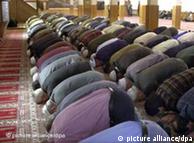
A study looking at the integration of Muslims in Germany has revealed that a high percentage of Islamic inhabitants harbor fundamentalist attitudes.
The survey, which was commissioned by Interior Minister Wolfgang Schäuble and carried out by the Institute of Criminology at the University of Hamburg, concluded that 40 percent of Muslims in Germany would justify the use of violence in the event of Islam being threatened by the West.
According to the study, more than 44 percent of Muslims also believe that they will be granted entry to paradise if they die defending their religion.
Continued...
Monday, December 24, 2007
Sombre Christmas in Iraq
From Al Jazeera
Sombre Christmas in Iraq
By Linda Isam Haddad and Nihal Salem
Rita and Maria Farid, two Iraqi Christians living in the central Baghdad district of Karrada, did not want to celebrate Christmas this year and only bought a tree at the last minute.
"Christmas is very difficult for us. It's a time for family and friends, and this year for the first time, our family is incomplete," Maria Farid said.
In early May, Majid Farid, their brother, was killed in a car bomb blast as he walked to a currency exchange centre not far from the family home.
"He was going to convert Iraqi dinars to dollars to go to Jordan and meet a lovely Iraqi woman he had hoped to marry," Maria recalled.
"We knew something had happened to him immediately. I tried calling him on his mobile phone, but I couldn't get through and I just knew."
Rita and Maria sit with their backs to the small, plastic Christmas tree which has been relegated from the centre of the family room, to an unobtrusive corner near the door.
"We didn't even want to put up a tree," Rita says quietly. "But we did not want to depress relatives and friends and remind them constantly of that terrible day we lost Majid."
The Farid family is one of the relatively few Iraqi Armenian families remaining in the predominantly Shia area of Karrada. They moved from Basra to Baghdad during the Iran-Iraq war in the mid-1980s due to heavy bombing in southern Iraq.
Although most Iraqi Armenians observe Christmas on January 6, Maria's mother is Chaldean Catholic.
She said: "In past years, we'd go to the church on Christmas Eve and spend Christmas Day visiting friends and family and attending Christmas parties. Then in January we'd have our personal family Christmas, sitting around our tree and exchanging gifts."
Christmas past
In San Diego, California, Jennifer Hanna, 53, also a Chaldean Christian from Karrada, prepares to celebrate this Christmas with her husband and three children.
She said: "Celebrating in San Diego reminds me of the days I celebrated Christmas with my family in Iraq, before I moved to America.
"We would go to church and celebrate Christmas festivities in our communities among our Muslim neighbours."
Hanna said her family would serve delicious homemade Iraqi sweets to their Christmas visitors, just as she will this year, but jokes about how she now buys her sweets from the many Iraqi bakeries sprinkled around San Diego.
Hanna's tone changes to sombre as she explains that many Christians are fleeing their homes in Iraq to escape the dangers of "the extremist outsiders who are creating fear and terror among the Christian communities in Iraq".
Hanna said: "My brother and his wife moved to Jordan to escape the violence and it is their Muslim neighbours who are protecting their home in Iraq now.
"Iraqis have got along and this is what I experienced when I lived in Iraq. My best friend who I would have sleepovers with was Shia."
According to figures compiled by the Chaldean Federation of America (CFA), which provides humanitarian relief for displaced Chaldeans in and outside Iraq, 1.2 million Iraqi Christians practiced their faith without fear of persecution before the March 2003 US invasion.
Targeting Christians
Sectarian violence and religious persecution have forced an exodus of Christians to neighbouring countries, with the CFA saying only about 300,000 remain, many of whom are displaced within northern Iraq.
However, the numbers significantly jumped since the June 2007 killing of Father Ragheed Ganni, a Chaldean Catholic priest, and three sub-deacons who were with him, in the northern Iraqi city of Mosul.
The corpses were then rigged with explosives.
Though he had been threatened numerous times and his Holy Spirit parish attacked, Ganni had refused to leave the country.
Ganni's death followed a trend of assassinations and kidnappings targeting the Christian community which began following the fall of Saddam Hussein's government in 2003.
On August 2, 2004, more than a dozen Christian worshippers were killed when five Armenian, Assyrian and Chaldean churches came under co-ordinated attacks in the capital Baghdad and the northern city of Mosul.
Nine other churches were attacked before the end of the year.
Christian merchants who sold alcohol or music tapes and CDs were kidnapped and killed, their shops firebombed for "corrupting Islamic society".
Iraq's Christian heritage
In 2006, the United States Commission on International Religious Freedom (USCIRF) warned that religiously motivated attacks signalled "an exodus that may mean the end of the presence in Iraq of ancient Christian and other communities that have lived on those same lands for 2,000 years".
The CFA says an estimated 20 percent of Iraqi refugees seeking asylum around the world in 2007 were Christian.
Despite the violence and targeting of the Christian communities in Iraq, Joseph Kassab, executive director of the CFA, said he does not encourage Iraqi Chaldeans to leave Iraq because it is their homeland.
But he acknowledged: "If there is any Christmas celebration in Iraq today, it's a very passive one and quiet one, to say the least."
Alice Marogil, an Iraqi Assyrian married to an Iraqi Chaldean, who left Iraq in 1976, is a social worker with the Chicago-based Interfaith Refugee and Immigration Ministries.
She has worked with at least one hundred Iraqi refugees of both Christian and Islamic faiths in the US.
While she acknowledges that Iraqis once celebrated Christian and Islamic holidays together, she believes as long as extremist militias and foreign terrorists stay in Iraq there will never be an end to the violence.
She said: "I do not see any light at the end of this tunnel. It's a very, very dark one.
"As long as there is no strong leader and government that knows how to take control, the chaos and terror will go on and on. You will see."
Sombre Christmas in Iraq
By Linda Isam Haddad and Nihal Salem
Rita and Maria Farid, two Iraqi Christians living in the central Baghdad district of Karrada, did not want to celebrate Christmas this year and only bought a tree at the last minute.
"Christmas is very difficult for us. It's a time for family and friends, and this year for the first time, our family is incomplete," Maria Farid said.
In early May, Majid Farid, their brother, was killed in a car bomb blast as he walked to a currency exchange centre not far from the family home.
"He was going to convert Iraqi dinars to dollars to go to Jordan and meet a lovely Iraqi woman he had hoped to marry," Maria recalled.
"We knew something had happened to him immediately. I tried calling him on his mobile phone, but I couldn't get through and I just knew."
Rita and Maria sit with their backs to the small, plastic Christmas tree which has been relegated from the centre of the family room, to an unobtrusive corner near the door.
"We didn't even want to put up a tree," Rita says quietly. "But we did not want to depress relatives and friends and remind them constantly of that terrible day we lost Majid."
The Farid family is one of the relatively few Iraqi Armenian families remaining in the predominantly Shia area of Karrada. They moved from Basra to Baghdad during the Iran-Iraq war in the mid-1980s due to heavy bombing in southern Iraq.
Although most Iraqi Armenians observe Christmas on January 6, Maria's mother is Chaldean Catholic.
She said: "In past years, we'd go to the church on Christmas Eve and spend Christmas Day visiting friends and family and attending Christmas parties. Then in January we'd have our personal family Christmas, sitting around our tree and exchanging gifts."
Christmas past
In San Diego, California, Jennifer Hanna, 53, also a Chaldean Christian from Karrada, prepares to celebrate this Christmas with her husband and three children.
She said: "Celebrating in San Diego reminds me of the days I celebrated Christmas with my family in Iraq, before I moved to America.
"We would go to church and celebrate Christmas festivities in our communities among our Muslim neighbours."
Hanna said her family would serve delicious homemade Iraqi sweets to their Christmas visitors, just as she will this year, but jokes about how she now buys her sweets from the many Iraqi bakeries sprinkled around San Diego.
Hanna's tone changes to sombre as she explains that many Christians are fleeing their homes in Iraq to escape the dangers of "the extremist outsiders who are creating fear and terror among the Christian communities in Iraq".
Hanna said: "My brother and his wife moved to Jordan to escape the violence and it is their Muslim neighbours who are protecting their home in Iraq now.
"Iraqis have got along and this is what I experienced when I lived in Iraq. My best friend who I would have sleepovers with was Shia."
According to figures compiled by the Chaldean Federation of America (CFA), which provides humanitarian relief for displaced Chaldeans in and outside Iraq, 1.2 million Iraqi Christians practiced their faith without fear of persecution before the March 2003 US invasion.
Targeting Christians
Sectarian violence and religious persecution have forced an exodus of Christians to neighbouring countries, with the CFA saying only about 300,000 remain, many of whom are displaced within northern Iraq.
However, the numbers significantly jumped since the June 2007 killing of Father Ragheed Ganni, a Chaldean Catholic priest, and three sub-deacons who were with him, in the northern Iraqi city of Mosul.
The corpses were then rigged with explosives.
Though he had been threatened numerous times and his Holy Spirit parish attacked, Ganni had refused to leave the country.
Ganni's death followed a trend of assassinations and kidnappings targeting the Christian community which began following the fall of Saddam Hussein's government in 2003.
On August 2, 2004, more than a dozen Christian worshippers were killed when five Armenian, Assyrian and Chaldean churches came under co-ordinated attacks in the capital Baghdad and the northern city of Mosul.
Nine other churches were attacked before the end of the year.
Christian merchants who sold alcohol or music tapes and CDs were kidnapped and killed, their shops firebombed for "corrupting Islamic society".
Iraq's Christian heritage
In 2006, the United States Commission on International Religious Freedom (USCIRF) warned that religiously motivated attacks signalled "an exodus that may mean the end of the presence in Iraq of ancient Christian and other communities that have lived on those same lands for 2,000 years".
The CFA says an estimated 20 percent of Iraqi refugees seeking asylum around the world in 2007 were Christian.
Despite the violence and targeting of the Christian communities in Iraq, Joseph Kassab, executive director of the CFA, said he does not encourage Iraqi Chaldeans to leave Iraq because it is their homeland.
But he acknowledged: "If there is any Christmas celebration in Iraq today, it's a very passive one and quiet one, to say the least."
Alice Marogil, an Iraqi Assyrian married to an Iraqi Chaldean, who left Iraq in 1976, is a social worker with the Chicago-based Interfaith Refugee and Immigration Ministries.
She has worked with at least one hundred Iraqi refugees of both Christian and Islamic faiths in the US.
While she acknowledges that Iraqis once celebrated Christian and Islamic holidays together, she believes as long as extremist militias and foreign terrorists stay in Iraq there will never be an end to the violence.
She said: "I do not see any light at the end of this tunnel. It's a very, very dark one.
"As long as there is no strong leader and government that knows how to take control, the chaos and terror will go on and on. You will see."
Iraqi cardinal's Christmas message: Come back

Iraqi cardinal's Christmas message: Come back
The spiritual leader of Iraq's Catholics made an appeal Monday for all those who have fled to return and help rebuild their shattered homeland. It might be a tough sell. Iraq's small Catholic community gathered in churches for Midnight Mass in the middle of the afternoon because few will go out after dark. full story

Foreigners flock back to Bethlehem

Christian worshippers light candles at the Church of the Nativity, believed to be the birthplace of Jesus.
Foreigners flock back to Bethlehem
Christian pilgrims from all over the world have arrived to celebrate Jesus' birth
Most had been put off visiting Bethlehem since fighting erupted in 2000
But Israeli-Palestinian peace conference in U.S. last month has calmed fears
BETHLEHEM, West Bank (AP) -- Gloom was banished from Christmas celebrations in Bethlehem for the first time in years on Monday as Christian pilgrims from all over the world flocked to celebrate Jesus' birth in an atmosphere of renewed tranquility.
After Israeli-Palestinian fighting erupted in 2000, most of the people milling around Manger Square in the center of this biblical town on Christmas had been local Palestinians.
But this year there were large numbers of tourists from all over the world, back after avoiding the region's strife.
Tiago Martins, 28, from Curitiba, Brazil, said he was excited about visiting. New peace talks between Israelis and Palestinians reassured him that there was no threat to his safety, he said, before crossing from Jerusalem to Bethlehem.
"The idea that it's a Christian city makes me more calm, and I think going to the West Bank is more comfortable since Annapolis," Martins said, referring to the Israeli-Palestinian peace conference held in the U.S. last month.
Bethlehem Mayor Victor Batarseh predicted earlier this month that the lull in violence would help to bring about 65,000 tourists to visit to visit the traditional site of Jesus' birth this Christmas -- four times the number who trickled into town for the festivities in 2005.
Still, unmistakable signs of the conflict that has killed more than 4,400 Palestinians and 1,100 Israelis in just the past seven years made it clear that peace was not yet at hand.
Gray concrete walls measuring about 25 feet high enclose Bethlehem on three sides -- part of the separation barrier that Israel says it is building to keep out attackers from the West Bank.
Palestinians allege that the complex of concrete slabs and electronic fence, which dips into parts of the West Bank, is a thinly-veiled land grab.
Latin Patriarch Michel Sabbah, the Roman Catholic Church's highest official in the Holy Land, could only reach Bethlehem after passing through a massive steel gate in the barrier. An escort of Israeli mounted policemen led Sabbah, in his flowing gold and burgundy robe, up to the gate, where border policemen waited to clang it shut behind him.
Last week, Sabbah waded into the charged debate over Israel's Jewish character by alleging that Israel's identity as a Jewish state discriminates against non-Jews.
"If there's a state of one religion, other religions are naturally discriminated against," Sabbah -- the first Palestinian to hold the position -- told reporters at his annual pre-Christmas press conference. Israel rejected his claim that people of other faiths do not enjoy equal rights.
According to the Jerusalem Center for Jewish-Christian Relations, there are an estimated 170,000 Christians in Israel, the West Bank and Gaza.
In Gaza, the mood was much more somber than in Bethlehem. Festivities in the poverty-stricken territory's tiny Christian community of 3,000 were decidedly muted.
For decades, Christmas had been marked by an enormous, lavishly-decorated tree in Gaza City's main square, colored lights strung across the plaza and Christmas carols ringing out from loudspeakers. Shopkeepers did a brisk business selling decorations, cards and gifts, but all this cheer evaporated with the outbreak of fighting between Israelis and Palestinians in late 2000.
The grimness only deepened this year with the assassination of a prominent Christian activist, Rami Ayyad, after Islamic Hamas militants overran the coastal strip.
There were few outward signs of celebration, and an austere midnight mass was planned at the city's only Roman Catholic church.
Hamas has denied involvement in Ayyad's killing and vowed to find those responsible for his slaying in October.
Early on Monday, hundreds of Gaza Christians lined up at the passenger crossing between Gaza and Israel, hoping to be allowed to cross over to the West Bank to celebrate in Bethlehem. Many of those who hoped to leave said they did not plan to return.
Israel said it would allow in 400 Christmas celebrants from Gaza.
Iranian Ex-President Attacks Hardliners
By ALI AKBAR DAREINI – December 22, 2007
TEHRAN, Iran (AP) — A popular former president has resumed his attacks
against hardline Iranian clerics threatening to disqualify reformists
from upcoming elections.
In comments published Saturday, Mohammad Khatami, the president until
2005, was quoted as telling residents in the northwestern town of
Tabriz that arbitrarily banning candidates was against Iran's
constitution and Islam.
The remarks were the latest in a wave of criticism of the hardline
bloc, which includes Khatami's successor, Mahmoud Ahmadinejad.
"No one and no authority has the right to deprive an individual, who
... is loyal to the constitution and has not committed any crimes
proved in court, of the right to elect or be elected," Khatami was
quoted by several pro-reform newspapers as saying Thursday. "Such
deprivation, under any pretext, is against the spirit of the
constitution and Islam."
Khatami, who voiced similar criticism earlier this month, was
referring to threats made by Ayatollah Ahmad Jannati, the powerful
head of the Guardian Council, Iran's constitutional watchdog.
Jannati, a key ally of Ahmadinejad and Iran's supreme leader Ayatollah
Ali Khamenei, said in early December that any candidate determined by
the Guardian Council to be disloyal to the principles of Iran's 1979
Islamic revolution would be barred from parliamentary elections in
March.
The Guardian Council's 12 members include six clerics hand-picked by
Khamenei, who has final say on all state matters and is commander in
chief of the armed forces. Hardliners consider him to be answerable
only to God.
In 2004, the council prohibited thousands of reformists from running
in the elections, resulting in the hard-liners' takeover of the
parliament.
Political analyst Leila Chamankhah said Khatami's repeated attacks
against Iran's hardliners and his increasing public appearances
signaled a vigorous re-entry into politics ahead of parliamentary
elections in March.
"This is a new political comeback for Khatami after his departure from
the presidency," she said. "He feels he has a responsibility to come
to the support of reformers who fight for greater democracy and
personal freedoms in Iran."
Khatami largely disappeared from the public spotlight after he stepped
down as president. He has said he won't run in the March elections but
has begun publicly supporting reformists who hope to retake control of
the legislature from hardliners.
The former president won a landslide victory in 1997 on the promise of
promoting political and social freedom. He was re-elected in 2001, and
his stint in office saw a significant expansion of social freedoms.
Reformists are trying to form a grand coalition with independent
groups in the hope of winning the upcoming elections. However,
disqualification of prominent reformists could dash their hopes of
retaking control of the parliament.
Calling hardliners like those on the Guardian Council "fossilized,"
Khatami said they were a major obstacle to Iran's progress.
"We have to be careful that our Islam is not confiscated by the
fossilized because that is a dangerous Islam," Khatami was quoted as
saying. "The fossilized are those who pretend to be sanctimonious,
oppose progress, logic and people's sovereignty over their fate."
Sunday, December 23, 2007
Ahmadiyah Mosque Vandalised in Indonesia
Indonesian sect's mosque hit in new attack
(AFP)
(AFP)
23 December 2007
JAKARTA - Masked men early Sunday vandalised a mosque and four houses
belonging to an Islamic sect considered deviant by many Muslims in the
second attack on the group this month in Indonesia, a report said.
Some 30 people wearing masks and riding motorcycles attacked an
Ahmadiyah mosque in Sadasari village in West Java province, online
news site Detikcom reported.
'There was the sound of motorcycles and when we came out, several
things in the mosque, such as the carpets, were set on fire,' a local
resident was quoted as saying by Detikcom.
Police were investigating the incident.
It was the second attack this month on a settlement of Ahmadiyah,
which is considered deviant by many Muslims since it believes Mohammed
was not the final prophet, contradicting a central tenet of mainstream
Islam.
Hundreds of Muslims attacked a housing complex belonging to the same
sect in a neighbouring district last week, damaging 14 houses and two
small mosques.
Sunday's incident came despite a warning by the country's Vice
President Jusuf Kalla that police have been ordered to act firmly
against such attackers.
Around 200 members of Ahmadiyah were forced to move to temporary
shelters on the Muslim island of Lombok, near Bali, after hardline
Muslims attacked their homes and mosques early last year.
Iran: Women excluded from sports in the name of Islam
Tehran, 19 Dec. (AKI) - The vice president of the Iranian Olympic Committee, Abdolreza Savar, has announced new rules to fight what he defines as the sport's "subjugation to western customs and practices"
In a memorandum sent to all sporting federations, Savar, who is in-charge of the "proper behaviour of male and female athletes" said that "severe punishment will be meted out to those who do not follow Islamic rules during sporting competitions" both local and abroad.
The memorandum also said that "no male coach can train or accompany the athletes when they travel abroad."
"If female trainers are not found, our female teams will not participate in international competitions," said Savar.
Iran's athletes are considered among the best in the Middle East, but due to severe restrictions imposed by the government, women are sometimes excluded from competition and prevented from fully exploiting their potential.
An example of this is the Iranian volleyball team, which has not been able to qualify to any international competition, as it does not have a trainer.
"In volleyball there aren't any female trainers capable, and the Olympic committee does not allow us to employ males to train the female team," said Saiid Derakhshandeh, president of the Iranian Voleyball Federation.
Iran's voleyball team was once considered to be among the best in Asia.
The memorandum also referred to new rules regarding the attire worn by the athletes, saying that if these rules are not followed, the athletes will be severely punished and will not be able to participate in future national or international competitions.
Savar also made reference to a Tae-Kwon-Do competition held on the island of Macau, in China when a male referee grabbed and raised the arm of a female Iranian player who had won a tournament.
He said that Iran's sportswomen will not participate at the next Olympic games, in any discipline, where there will be any sort of physical contact with the referee, if it is a man.
Iran's objective, says Savar "is not just to win medals, but to promote Islamic culture, and thus we have decided to inaugurate an exhibition dedicated to Islamic values during the Olympic games in Beijing" in 2008.
Other women in Iran have also been prevented from pursuing their sporting activities.
Iranian rally car champion driver Laleh Seddigh was banned for 12 months from participating in any race.
She was accused of having tampered with her car's engine during her last race in Iran.
In a telephone interview with Adnkronos International (AKI) Seddigh says "It's a conspiracy, I did not commit any irregularities. They simply want to exclude me from racing because I'm a woman."
Seddigh, known as the "Schumacher of the East", in reference to the now retired seven-time Formula 1 world champion Michael Schumacher.
"They probably did not appreciate the fact that I am a woman and at the same time the most famous racecar driver in the Middle East," she said. "They would prefer to see a woman with a frying pan or an iron in her hand."


In a memorandum sent to all sporting federations, Savar, who is in-charge of the "proper behaviour of male and female athletes" said that "severe punishment will be meted out to those who do not follow Islamic rules during sporting competitions" both local and abroad.
The memorandum also said that "no male coach can train or accompany the athletes when they travel abroad."
"If female trainers are not found, our female teams will not participate in international competitions," said Savar.
Iran's athletes are considered among the best in the Middle East, but due to severe restrictions imposed by the government, women are sometimes excluded from competition and prevented from fully exploiting their potential.
An example of this is the Iranian volleyball team, which has not been able to qualify to any international competition, as it does not have a trainer.
"In volleyball there aren't any female trainers capable, and the Olympic committee does not allow us to employ males to train the female team," said Saiid Derakhshandeh, president of the Iranian Voleyball Federation.
Iran's voleyball team was once considered to be among the best in Asia.
The memorandum also referred to new rules regarding the attire worn by the athletes, saying that if these rules are not followed, the athletes will be severely punished and will not be able to participate in future national or international competitions.
Savar also made reference to a Tae-Kwon-Do competition held on the island of Macau, in China when a male referee grabbed and raised the arm of a female Iranian player who had won a tournament.
He said that Iran's sportswomen will not participate at the next Olympic games, in any discipline, where there will be any sort of physical contact with the referee, if it is a man.
Iran's objective, says Savar "is not just to win medals, but to promote Islamic culture, and thus we have decided to inaugurate an exhibition dedicated to Islamic values during the Olympic games in Beijing" in 2008.
Other women in Iran have also been prevented from pursuing their sporting activities.
Iranian rally car champion driver Laleh Seddigh was banned for 12 months from participating in any race.
She was accused of having tampered with her car's engine during her last race in Iran.
In a telephone interview with Adnkronos International (AKI) Seddigh says "It's a conspiracy, I did not commit any irregularities. They simply want to exclude me from racing because I'm a woman."
Seddigh, known as the "Schumacher of the East", in reference to the now retired seven-time Formula 1 world champion Michael Schumacher.
"They probably did not appreciate the fact that I am a woman and at the same time the most famous racecar driver in the Middle East," she said. "They would prefer to see a woman with a frying pan or an iron in her hand."
Calgary Imam Goes on Hunger Strike to Denounce Family Violence
From the Canadian Press
Calgary imam says Islam, family violence don't mix; goes on hunger strike
CALGARY - An imam from Alberta was planning to go on a weekend hunger strike to bring attention to domestic violence and how it is completely against the teachings of Islam.
Any violence involving families is "absolutely un-Islamic," Syed Soharwardy of the Calgary Islamic Centre said Friday.
"We should not be using religion as a scapegoat to justify what we need. We should resolve our disputes based on reasoning, logic (and) cool-mindedness."
The imam's comments came after the death earlier this month of 16-year-old Aqsa Parvez of Mississauga, Ont., who reportedly had a long-standing dispute with her family over her apparent reluctance to wear the traditional Muslim headscarf, the hijab.
Her father, who has not yet entered a plea, has been charged with her murder.
Soharwardy, who is also national president of the Islamic Supreme Council of Canada, said family violence plagues every group in society, but it seems that faith is only used as an excuse when it comes to Muslims.
He also said it is against his religion to force Islamic will upon others. "Islam wants people to have a righteous and a pious life, but Islam leaves that decision up to that person."
Other Canadian Islamic leaders have also publicly come out this week to emphasize that their religion condemns violence and teaches its followers not to force their beliefs upon othersIranian Cleric urges Christians to Prevent Desecration of Sanctities
to: faisalalam.queermuslims@blogger.com
when: december 28, 2007 at 12:00pm
From IRNA
Tehran, Iran
IExperts Assembly Head Ayatollah Akbar Hashemi Rafsanjani here Friday called on the world Christians and the Christian leaders not to allow certain groups to insult Islam and its holy Prophet Mohammad (PBUH).
Addressing the Eid-ul-Adha congregational prayers, Ayatollah Rafsanjani deplored desecration of Islamic sanctities in the West and said the sacrilegious practices are contrary to the spirit of divine religions.
"No Muslim would tolerate insult to Prophet Jesus (AS); So, one should not allow desecration of the divine religions," he added.
He said Muslims, based on Quranic injunctions, do not make any distinction among the divine prophets.
"I call on all the Christians, especially Christian ulema, to take commonalities of the divine religions into consideration," he urged.
He said Holy Quran has invited the divine religions to cooperate with Muslims on commonalities.
He insisted that commonalities of followers of divine religions are much more than their difference.
when: december 28, 2007 at 12:00pm
From IRNA
Tehran, Iran
IExperts Assembly Head Ayatollah Akbar Hashemi Rafsanjani here Friday called on the world Christians and the Christian leaders not to allow certain groups to insult Islam and its holy Prophet Mohammad (PBUH).
Addressing the Eid-ul-Adha congregational prayers, Ayatollah Rafsanjani deplored desecration of Islamic sanctities in the West and said the sacrilegious practices are contrary to the spirit of divine religions.
"No Muslim would tolerate insult to Prophet Jesus (AS); So, one should not allow desecration of the divine religions," he added.
He said Muslims, based on Quranic injunctions, do not make any distinction among the divine prophets.
"I call on all the Christians, especially Christian ulema, to take commonalities of the divine religions into consideration," he urged.
He said Holy Quran has invited the divine religions to cooperate with Muslims on commonalities.
He insisted that commonalities of followers of divine religions are much more than their difference.
Report From Toronto 2007: A Jihad For Love

Parvez Sharma and Sandi Dubowski at Toronto International Film Festival 2007
Report From Toronto 2007: A Jihad For Love
Published on December 20, 2007
From MediaRights
by Harriette Yahr
A Jihad for Love explores the complex and sometimes life-threatening crossroads and differences of Islam and homosexuality. Filmed in twelve countries over a period of six years, the documentary was directed and co-produced by Parvez Sharma. Several of the film's participants were on hand at the Toronto International Film Festival. Director and co-producer Parvez Sharma's blog details his festival experiences, the doc's political and social context, and media and community reactions. The response has varied from hostility to healing including hate responses and footage screened on Oprah in her recent "Gays around the World" program that featured one of the film's subjects.
The focus of this interview is on the filmmaking process and outreach. Sandi Dubowski, who also produced, is well-known in the documentary community for spearheading an outreach campaign around the film Trembling Before G-d to affect change for queer Orthodox Jews—either one Hasidic rabbi at a time at small underground screenings or to packed houses at Film Forum. His outreach continues to this day. Trembling on the Road, a featurette that documents the impact of Trembling Before G-d and includes updates on the subject's lives, is making house party rounds.
Sharma and Dubowski will tour festivals worldwide with A Jihad for Love. To Sharma, the full impact of his film will be ascertained many years from now "by how many lives it transformed, how many communities it opened up, and what its contribution artistically and from a social activism point was to the documentary form."
---
Parvez, congratulations on Toronto. It must be great to have worked so long and have a kickoff like that. How was it for you?
Toronto was a profoundly moving and extremely empowering experience. To birth a film after six years and then to actually find it holds up the mirror to a very wide spectrum of the audience is heartwarming. There were standing ovations and one Iranian woman came up to me after a screening and said 'I am straight and I am a devout Muslim, I came here expecting a film that would critique my faith. I leave with a poem to Islam'. Another man, a gay Muslim refugee was so moved, that he had to be helped out of the theater, crying, saying that the film was so closely about his own experiences of pain, alienation and loss of home and nation that he was not able to finish seeing it. In a time when Islam is so misunderstood and under a great deal of attack from within and without, it was empowering to see this intensely Muslim work be affirmed by Muslims and non-Muslims alike.
Sandi, where did you meet Parvez?
We met in January 2002 at an interfaith panel—Jewish, Muslim, Christian—for Trembling Before G-d during its theatrical release in a Washington D.C. cinema. Parvez approached me for advice on the film; he had an idea for the movie but hadn't filmed anything yet. By the fall of 2002, I came on board as producer.
Sandi, can you say a few things about your process working solely as a producer since you are also a director?
I definitely had to learn how to support a director's vision without imposing my own. I think early on I began advocating for the film to shift from stories that Parvez was focusing on in US, UK and Canada to being a film that told the story of what it was like to negotiate gay or lesbian life in Muslim nations. That we agreed on. But Parvez and I come from really different backgrounds - immigrant and US citizen, brown and white, Muslim and Jewish - and these definitely affected how we relate to the issues, to the film industry here in the US, to each other and to every aspect of this challenging work. So I have learned a lot about fear and a lot about ego and how to forge a common mission despite the differences that often roil these kinds of global collaborations.
What did you learn from Trembling to apply to Jihad?
There are big differences but a lot of similarities too. One is the commitment to working with people who have experienced great trauma and pain and being there in the long haul for them when the camera is turned of. Parvez has really taken on that responsibility, that devotion to the people in the film and their lives.
Two, is the experience of turning a movie into a movement and applying all my experience with Trembling to A Jihad for Love. An amazing web of networks have carried us forward and helped us overcome the many hurdles we have faced. I have been able to leverage so much of the success of Trembling for A Jihad for Love—funders, press, festival directors, crew, connections.
I think Islam is in a very different political and religious place than Judaism today and I am learning a lot from the process.
Parvez, what were some of your biggest creative challenges?
As a Muslim filmmaker and someone who does not come from the west or any western way of thought and documentary filmmaking, the need to accurately and faithfully depict the many worlds of Islam, without exoticizing or orientalizing the other, was a significant challenge for me. Another profound challenge as a documentary filmmaker engaged in the business of truth-telling was to invent ways of depicting something as intangible and as personal as faith. As the primary cameraperson on the film as well, this was a constant process of discovery and what helped tremendously was the really close relationships I was able to develop with all of my subjects.
What was it like shooting and directing?
In many ways being a Muslim enabled me to film with a Muslim lens and a great deal of understanding of Islam. For example, I knew what camera choices to make around filming a quran or filming people praying in a mosque. The shared commonality of Islam with my subjects often required me to be the one filming them. Also, camera crews were sometimes not an option simply because I was filming after long periods of trust building and filming the deeply personal. I was also often filming exteriors while pretending to be a tourist and there was a sense of danger so in many situations I just had to operate the camera myself.
Sandi, can you talk a little about the financing, I think other filmmakers would be interested in how it all came together.
This was a project shot in twelve countries and nine languages so fundraising was especially immense. However, I knew that European broadcasters would fund a project on Islam and that we could create co-productions. Only after we forged a co-production with Channel 4 (UK), ZDF-Arte (France/Germany), SBS (Australia) and LOGO (US) with our sales agents, Andrew Herwitz of Film Sales Company and Linda Saetre of Saetre Films, did I really even start approaching donors and foundations. It would be easier for them to come on board at a the mid-point for post-production when they knew they were supporting something real and vetted by five international TV stations and a work that would have a broadcast audience of hundreds of millions.
We also have around thirty-five foundations supporting the work ranging from major foundations like The Sundance Documentary Fund, The Hartley Film Foundation to a number of small gifts from gay and lesbian family funds with The Horizon Foundation. We threw gala benefit parties in New York City, Los Angeles, San Francisco, Miami, Boston, and Washington D.C. forming Host Committees from a number of worlds—gay and lesbian, Muslim, Arab, human rights, philanthropy, South Asian, social justice. In New York City, we had 300 people on the Host Committee. So there are hundreds of donors to the project.
Out of our Boston Gala, we met Michael Huffington, who came on board as an Executive Producer while we were locking picture. We met the people from The Katahdin Foundation out of our work organizing the Bay Area Gala and they came on board as co-producers.
Sandi, I recently interviewed Frederick Wiseman and he said something interesting. I asked him if he saw documentary film as tool for social or political change. He said no, that he doesn't think it's possible to assess the impact of a film, because people in a democracy have many sources of information—movies, books, magazines, newspapers, the internet, radio, etcetera. He then said he knows of no example of a single work producing political change. Does that surprise you?
I, not surprisingly, completely disagree. Just a few nights ago, I was at a dinner and reconnected with someone, Josh, who was at our [Trembling Before G-d] Los Angeles Premiere who grew up Orthodox and who is gay. I still remember his sobbing and wailing at the screening. He told me he hyperventilated for the first time that night. His body did not know how to even process Trembling Before G-d. It was the first time he saw his experience onscreen and actually in any media. This changed his life. Multiply by the eight million or so people who have seen the work and you witness a tipping point in Judaism.
The most concrete political policy change is that last winter, after years of intense discussion and debate, the Conservative Movement made a bold and historic policy change: legalizing the ordination of gay and lesbian rabbis and the ability to perform same-sex unions. So I am curious what Wiseman would say that.
If you could make Trembling all over, or take it out into the world again, what would you do differently?
I am really happy with how everything happened. Every film has its own unique journey and every step led to the next.
Do you think festival, theatrical or broadcast exposure has as much impact on social change as targeted outreach, like community or university screenings?
I believe in a mix. I do think platforms like cinemas can be turned into town halls and create social change. With Trembling Before G-d, I saw the audience at Film Forum transform over the four months we were there. Towards the middle of our run, more and more religious Jews were coming—they became very curious about all this attention to their community and people were amazed because they expected an attack on Orthodox Judaism and instead found a film with a deep love for the community and Jewish tradition. Remember too that traditional members of the community did not watch TV or go to movies so I had to organize underground screenings in Hasidic homes.

Parvez Sharma on location in Istanbul
photo by Ismail Necmi
Parvez, what are your general outreach plans with A Jihad for Love?
It is critical to do outreach with communities of Muslims everywhere. Given that there are more than a billion Muslims in the world and they represent roughly one sixth of all humanity, we are talking large numbers. I feel that this is the right time to begin discussions on sexuality within Islam and the rules of engagement within Muslim outreach need to be worked at carefully. I know that the film will also need to be seen in Muslim nations where traditional models of dissemination through film festivals will not be an option, so we will need to work through underground networks of contacts I have already developed over many years of work. Also in terms of outreach, the film has tremendous responsibility in trying to educate western audiences around Islam, told from the point of view of its most unlikely storytellers, gay and lesbian Muslims.
What are some specific plans?
Parvez: We will need to turn cinemas into spaces where discussions and debates become the norm and the outreach model of the film will in fact be propelled by very significant and intense audience engagement. I plan to invite Muslim religious scholars and activists into these debates because for me the end of making a film is just the beginning of a movement and filmmakers who spend a significant part of their lives creating work such as this need to be fully involved in making sure it has maximum possible impact in the world.
Dubowski: I think similarly, it is to have A Jihad for Love open hearts and minds.
Parvez, what do you hope you'll be saying about change in the queer Muslim community, maybe ten years from now?
Questions such as this are difficult for me to answer because I feel that I am only at the tip of the iceberg. What I know already is that the film is changing hearts, minds and mindsets. What audiences bring to the theaters and what they leave with are remarkable. There already seems to be a building awareness of the complexities of Islam and understanding that it is not a problematic monolith. I can only say and hope that in many years the longevity and the impact of this film will be assessed in terms of how it was a pioneering and courageous effort to start a critical discourse and I certainly don't feel that the discourse will have ended lets say ten years from now. It will continue for a long time to come.
Subscribe to:
Posts (Atom)