Saturday, December 22, 2007

Muslims seek ways to balance proximity of Eid and Christmas

From the Chicago Tribune

By Tina Shah

Tribune staff reporter

December 20, 2007

The day after Thanksgiving, Ali Khan drove his two sons to the neighborhood Home Depot to pick out a Christmas tree.


At home on Chicago's Northwest Side, Khan eagerly placed a silver-coated menorah, purchased at a decor store, under the tree. On top went a sequined emerald crescent bought on a trip to Morocco.

While few will go so far as to put up a decorated tree, many Muslim-American families cannot help but confront Christmas at this time of year. Their children are inundated with Christmas customs at school, in stores, at restaurants and on television, inspiring questions about Santa and presents.

This year brings a special challenge because the Christmas excitement is peaking just as Muslims prepare to celebrate the holiday of Eid al-Adha. Tied to the Islamic lunar calendar and the phases of the moon, Eid is expected by many to begin Thursday and last three days.

The holiday commemorates the willingness of Ibrahim, called Abraham in the Bible, to sacrifice his son at the request of Allah. It also marks the end of hajj, a period in which Muslims make pilgrimages to the holy city of Mecca.

Of course, many Muslims -- particularly recent immigrants -- choose to focus exclusively on Eid customs, which include prayer, family visits, festive food, sweets and gifts for the children.

But others say they are taking advantage of the close timing to clear up misconceptions, reiterate the significance of religious holidays and explain why they choose to partake in or refrain from activities associated with other faiths.

Khan, national director of the American Muslim Council, said he decorated a tree because he believes studying and understanding the teachings of Judaism and Christianity will help his sons become more faithful to Islam.

"You can isolate your kids, lock them up and say negative things, which is going to make them kind of be resentful," said Khan, 42. "Or you can embrace it. Let's study it and find out why we should be celebrating Christmas."

Celebrating equally

Mohammed Sahloul, president of the Mosque Foundation in Bridgeview and vice president of the Council of Islamic Organizations of Greater Chicago, said there is a need for Muslims in the U.S. to celebrate Islamic holidays as equal to non-Islamic ones.

That means taking days off work on those days, explaining their significance to children and exchanging gifts as Christians do on Christmas, he said. Muslims also should push to have Islamic holidays recognized in workplaces and particularly in schools so their children "don't feel like second-class citizens," he added.

"Parents have to stress the significance of their own holidays," said Sahloul, an Oak Lawn pulmonologist.

In the La Grange home of Jihad Shoshara, there is no Christmas tree to be found but rather a banner that reads "Happy Eid."

Shoshara said he grew up with a Muslim father and Catholic mother, was confused about his religious identity and does not want the same for his children. So he sends his children to an Islamic school in Des Plaines and seeks an active role in forming their identity as Muslims.

The pediatrician does not hesitate to take his two sons and daughter into Chicago to see the Christmas tree in Daley Plaza and the decorated windows at Macy's, but he stops there.

"We want our kids to meet all kinds of people, but when we are forming their identity, we don't want to confuse them," said Shoshara, 38.

Eiman Abdel Moneim and Asma Akhras, of Darien, said they have tried to find a "middle way" for their children, to mold an experience that is both American and Muslim.

The couple are part of a team of second-generation Muslim-Americans who formed the Mohammed Webb Foundation, a group that aims for all Americans to gain knowledge and experience of Islam. Their children attend the Muslim Educational Cultural Center of America in Willowbrook, where Akhras also teaches.

Like Shoshara, the couple take their children to see Christmas decorations in the city, but tell son Yousef, 9, and daughter Maaria, nearly 6, that Eid is their religious holiday.

The parents go out of their way to elevate the Eid spirit at home. They wait until the night before Eid to decorate the house with ornaments and streamers and buy presents for the children. One year, Akhras made crescent-shaped cookies for Yousef's classmates and helped decorate the lunchroom with Eid decorations.

This year, they said, the spirit has doubled with the close timing of Eid and Christmas.

Moneim, 35, said the two holidays add up to a season of joy. For Akhras, 33, the timing opens up doors. "The calendars coinciding eases up the differences and allows a platform for discussion," she said.

Religious side of Christmas

The executive director of the Council on American-Islamic Relations' Chicago chapter, Ahmed Rehab, agreed with her. He said most Muslim children see Christmas as an American celebration rather than a Christian one, so this is a chance for parents to explain the holiday's religious significance.

"Muslim Americans can take this opportunity in order to show children other faiths can have holidays that bring them closer to God," Rehab said.

Many African-Americans who are Muslim don't feel the need to shield their children from Christmas, whose rituals are usually familiar, said Seth Ibrahim, imam at the Mosque of Umar Inc. in Roseland.

But parents find themselves busy explaining the role of Christmas in Islam, he said, which is to respect the holiday without celebrating it.

A convert who has vivid memories of Christmases spent with family and friends, Ibrahim said he asks children at the mosque questions of his own: Do you feel left out? What is the Christmas message? Who is the key figure in Christmas?

"We don't celebrate it at all," said Ibrahim, 60. "We educate our children in what it is now and what it was then."

As Khan fields questions such as, "What is Santa going to give me this year?" from his sons, he said, he tries to teach them about the differences and commonalities between religions.

Khan does not send his sons to Islamic school, saying he seeks not to cloud their beliefs. The Muslim also prays Sundays at Armitage Baptist Church, across the street from his home.

Khan usually gives his children gifts on Christmas but this year will present them on Eid because the holidays are so close together. Although he wants to expose his sons to multiple religions, he said he is confident that in the end they will choose Islam.

"When you sow the seeds early, in terms of intellectual curiosity, hopefully they will start expanding and learning further on their own," he said.

While purchasing his Christmas tree, Khan even found an opportunity to teach his 6-year-old son, Imran, a quick lesson in modesty -- a quality valued in Islam. He deliberately picked one on the cheaper side.

Bangladeshi Writer Seeks Free Movement

December 20, 2007

NEW DELHI (AP) — Bangladeshi author Taslima Nasrin, who fled death threats in her home country, complained Friday that the Indian government was not allowing her to meet friends or travel outside the Indian capital.

"I want to live a normal life here. I've everything except freedom of movement," Nasrin told The Associated Press.

Nasrin has been hiding in New Delhi since last month after a violent protest by a Muslim group forced her to flee her home in Calcutta. The group, All India Minorities Forum, accused her of insulting Islam in her writings.

"They want to protect me. But they can always provide me with security when I go out," she said.

"I've a cell phone, Internet, but not freedom of movement. That's not helping me at all. I can't concentrate on my work," she said.

Nasrin said she wants to continue living in India.

"I love India and I know that people of India want me to live here," she said.

Last month, Indian External Affairs Minister Pranab Mukherjee said India would provide shelter to Nasrin, adding that the country expected guests to refrain from activities and expressions that may hurt the sentiments of the people.

In August, angry Muslim protesters attacked Nasrin in the southern Indian city of Hyderabad while she was attending the release of her book "Shodh" (Getting Even) in the local Teulgu language. She escaped unhurt.

She left Bangladesh in 1994 after Islamic extremists threatened to kill her. The death threats came after an Indian newspaper quoted her as saying changes must be made to the Islamic holy book, the Quran, to give women more rights.

She has vehemently denied making the comments but still faces threats against her life from Islamic hard-liners in Bangladesh, where one of her books is banned.

In 2004, the Bangladeshi government banned her Bengali-language book "Shei Shab Andhakar" ("Those Dark Days") for what it said were objectionable comments about Islam and the Prophet Muhammad.

Nasrin lived in Sweden for several years but eventually moved to India. She has applied for Indian citizenship or permanent residency.


Friday, December 21, 2007

Mosque of the Prophet in Medina - Picture of the Day

Mosque of the Prophet
The massive Mosque of the Prophet in Medina, Saudi Arabia, was built around the humble green-domed mosque from which Muhammad preached to the earliest community of Muslims about 1,400 years ago.
(Irfan Khan / Los Angeles Times)
December 8, 2007

Sikhs to Build New Gurdwara in Dubai

From World Sikh News

New gurdwara to come up in Dubai

Written by Jarnail Singh    
Thursday, December 20, 2007  

Amritsar: Sikh community of the Arab-Islamic city state Dubai has managed to winthe right to establish a new splendid gurdwara building on the 2,600 square yard prime land. The authorities perhaps want to show themselves as granting more religious freedom even though the official religion of the United Arab Emirates is Islam.

The building plans of the gurdwara have already received clearance and the construction will start from the New Year. Akal Takht jathedar Giani Joginder Singh Vedanti and Avtar Singh, president of the SGPC, have been invited to lay the foundation stone of the gurdwara. There are more than 2.5 lakh Sikhs in Dubai.

Meanwhile, Surinder Singh Kandhari, an affluent Sikh from Dubai, has donated two imported battery-operated floor scrubbing machines worth Rs 20 lakh to the Golden Temple last week.

Happy Holidays :)

Only Cinema (in West Bank & Gaza) - Picture of the Day


Only cinema

One place which draws Palestinians every night is the al-Kasaba cinema - the only cinema in the West Bank and Gaza.

It has two screens, currently showing Egyptian films - a comedy and a thriller.

But for some people, a single cinema is not enough.

"Nightlife in Ramallah is not good," said Osama Kilanu. "There are no clubs and not enough bars, although it's much better now than it used to be."

Iran: Clashes Highlight 'Demonization' Of Sufi Muslims


By Ron Synovitz
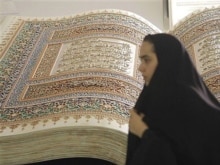
Iran -- A woman passes by a sculpture of an open holy Koran during the annual Koran exhibition in Tehran, 17Sep2007
A sculpture of Islam's holy book at Tehran's annual Koran exhibition in September
(AFP)
November 16, 2007 (RFE/RL) -- Clashes in Iran this week between security forces and followers of a mystic Sufi order have underlined what international human rights groups say is the increasing "demonization" of Sufi Muslims in Iran.

Dozens of people were injured and arrested during the November 11 clashes in the western city of Borujerd, and parts of the Sufis' monastery there were destroyed. Official media said the clashes came after Sufis attacked a Shi'a mosque in the city where clerics had been criticising Sufism.

Sufism is growing in popularity in predominantly Shi'ite Iran, though officials and conservative Shi'a clerics have said it is a deviation of Islam.

Centuries-old Tensions

Sufism is a mystic tradition within Islam in which individuals pursue absolute truth and divine wisdom through mystic revelation. It is best known around the world for its "whirling dervish" dances and for the mystical poetry of 13th-century Persian poet Molana Jalal ad-Din Rumi.

In fact, Sufi Muslims believe that rituals involving dance, music, and the recitation of Allah's divine names can give them direct perception of God.

But although many Sufi orders strictly observe Islamic practices and beliefs, some conservative Shi'a clerics in Iran say Sufism is a danger to Islam.

Indeed, there have long been tensions in Iran between Sufism and more orthodox traditions of Islam. Observers such as the human-rights group Amnesty International say these tensions have worsened -- and state tolerance for Sufi groups in Iran has diminished -- since the establishment of an Islamic republic some 28 years ago.

The poet Molana Jalal ad-Din Rumi (public domain)

And since Iranian President Mahmud Ahmadinejad came to power in 2005, Iranian authorities appear to be increasingly confronting Sufi Muslims.

Abdol Karim Lahiji, a prominent Iranian lawyer who directs the Paris-based League for Defense of Human Rights in Iran, tells RFE/RL that the divisions between Sufis and Shi'a in Iran can be traced back more than 1,000 years.

In particular, Lahiji notes that the approach toward Islam of Sufi orders -- known as Tariqas -- differs markedly from that of Iran's conservative Shi'a clerics, who follow a strict interpretation of Islamic rules known as shari'a law.

"First it's the historical problem between two kinds of thinking about Islam," Lahiji says. "It's two schools -- the school of shari'a and the school of Tariqa. Tariqa means Sufis [orders] and all the mystic schools. In all our history, it was always a fight between two kinds of interpretations of Islam. The Sufis were more tolerant of freedom of speech and freedom of religion. The [shari'a] people were more aggressive and less tolerant of the other interpretations of Islam."

The Islamic Revolution, which brought Iran's conservative clerics to power in 1979, also established shari'a as the basis of all laws in the country.

"For that reason, the other sections of Islam -- like Sunnis, like Ismaili, like Sufis -- not only haven't the same rights in the constitution and the political and judicial systems of Iran, they aren't considered real Muslims," Lahiji says. "For that reason, all kinds of persecution of these kinds of Muslims are permitted in Iran."

In broader terms, Lahiji sees the demonization of Sufi Muslims in Iran as a strategy by Ahmadinejad's regime aimed at discrediting individuals or groups that pose political challenges to the power of Iran's conservative Shi'a clerics.

"It's not only about the other sections of Islam. It's all the sections of society. In the last two years, the civil society of Iran -- the journalists, the students, the women, the [labor unions], the teachers, the universities -- all are victims of these very, very aggressive politics," he says. "And the other Muslim groups are [treated] the same. It's the result of the political aggression of Ahmadinejad."

Monastery Bulldozed

The November 11 clashes pitted police and Basij paramilitary troops against members of the largest Sufi order in Iran, Nematollahi Gonabadi.

Nematollahi Gonabadi is the Sufi order with teachings that most closely resemble Shi'a Islamic traditions. Nevertheless, Iranian security forces in the end used bulldozers to demolish parts of the Sufi monastery in Borujerd, known as Hossaini-ye Nematollahi Gonabadi.

There are conflicting reports about what led to the clashes, none of which could be independently confirmed. However, by all accounts, scores of people were injured and arrested during the confrontation.

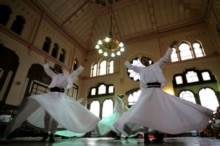
Whriling dervishes performing in Istanbul (AFP)

Iran's official state-run news agencies says Sufis attacked a Shi'a mosque, the Masjid an-Nabi, that is next door to their Sufi monastery.

Those reports say the Sufis were angry about criticism from Shi'a clerics that were being broadcast from loudspeakers in the mosque's minarets.

Sufis in Borujerd describe events differently. They say Shi'a clerics feel threatened by the growing popularity of the Sufi movement in Iran, especially among young people.

One Sufi follower in Borujerd told Radio Farda that Iranian authorities had invented stories about the Sufi attack on the Shi'a mosque in order to justify the destruction of the monastery.

"[Authorities] spread a rumor that Sufi mystics had attacked Masjid an-Nabi and injured one of the clerics there," he said. "This very rumor gave an excuse for the [paramilitary Basij] to say that they must seek vengeance. By mobilizing forces around the city, they somehow gathered people together and attacked Hossaini-ye, [the Sufi's monastery.] They attacked first with sticks and stones, demolishing the ceiling of Hossaini-ye. Then, when they entered Hossaini-ye, the Sufis and dervishes resisted and forced them back out of the building. Then, they attacked again -- this time using tear gas and colored gases. So they occupied the Hossaini-ye. They burned it and destroyed it. They are persecuting Sufis for their religious beliefs."

Leaders of other Sufi orders contacted by RFE/RL have declined to comment on the Borujerd dispute, saying they fear their followers will be persecuted in Iran if they issue political statements about Ahmadinejad's regime.

'Threatening Atmosphere'

The U.S. State Department says respect for religious freedom in Iran is extremely poor and has been deteriorating since Ahmadinejad came to power -- especially for Sufi Muslims and members of the Baha'i Faith.

In fact, just a week before the violence in Borujerd, Iranian Deputy Culture Minister Mohsen Parviz issued a statement saying there is no place for the promotion of Sufism in Shi'a-dominated Iran.

Parviz's remarks followed complaints from Shi'a clerics about state television coverage of the Rumi International Congress, an event in Iran commemorating the 800th anniversary of the birth of the Persian poet and mystic Rumi.

Parviz, who also served as executive director of the committee for the Rumi Congress, said the clerics' complaints focused on news broadcasts about performances of Sama, the Sufi practice of gathering to listen to religious poetry that is sung and often accompanied by ecstatic dance or other rituals.

The U.S. State Department says Tehran's actions and rhetoric have created a threatening atmosphere for nearly all religious minorities in Iran.

It also says Iran's government-controlled media has intensified negative campaigns against religious minorities since Ahmadinejad's election.

It notes that in late 2005, a shari'a scholar in the holy city Qom, Ayatollah Hossein Nouri-Hamedani, called for a crackdown on Sufi groups after labeling them a "danger to Islam." Since then, articles attacking Sufis have proliferated in Iranian national newspapers.

In February 2006, police closed a building in Qom that was being used as a house of worship by Sufis from the Nematollahi Gonabadi order. When Sufis responded by staging a protest in Qom, clashes broke out and Iranian authorities arrested more than 1,000 people.

Local officials in Qom said the Sufis had illegally created a center of worship and refused to leave it. They also said that some of the Sufis demonstrators had been armed.

But representatives of the Sufi order in Qom have denied the charges, saying they have been targeted for persecution because of the increasing popularity of Sufism.

(Radio Farda's Alireza Taheri contributed to this report)

At Hajj After Giving Up the Needle; Saudi Addicts Organize Group to Attend Hajj

From Arab News

At Hajj After Giving Up the Needle
Samir Al-Saadi, Arab News


Former addicts performing Haj under the National Anti-Drug Committee's rehabilitation program rest in their camp in Mina on Thursday.
(AN photo by Marwan Al-Juhani)

MINA, 21 December 2007 — Rehabilitation does not end by giving up the needle. The National Anti-Drug Committee's rehabilitation program, powered by the fifth pillar of Islam, took the extra mile to shed light into the futures of 200 people shattered by a dark past.

From 320 applicants, the committee accepted 200 former addicts and drug dealers to perform Haj this year. The program aims to support them in order to live normal lives without returning to their past addictions, said Abdelilah Al-Sharif, adviser to the committee and head of the Haj mission.

"What better means in opening a clean sheet than by performing Haj?" he said. "This is among a series of programs supervised by the committee to ensure achieving our set goal."

Since the beginning of the program eight years back, 1,250 former addicts have made use of the 12-step program. Of the 1,250 people who performed Haj, only 20 have returned to drugs, said Sharif.

"We have terms to accept applications: first they need to show that they have their mind set on leaving drugs for good, and, secondly, the applicant needs to integrate into the committee's programs."

Sami Al-Matrafi, a former drug addict who currently has devoted his life to helping other addicts in changing their lives, said that he had been an addict for 24 years of his life. "My past experience brings me close to the people on the program, as I have lived their experience," he said.

He described the first and last days of addiction as the hardest on him. "I lived a harsh experience; I feel that I am capable of making up for those years through my current work in helping other addicts," he said. "I have turned from a man with a bad reputation to a person that is currently respected by others."

The self-support program that is provided by the national committee for combating drugs comprises 12 steps with a time frame of between three months and two years depending on the case. The program is available through 13 of the committee's centers scattered across the Kingdom.

Hajj Barbers Pose Risk of STIs: Shaving-Transmitted Infections

From Arab News

Syed Faisal Ali, Arab News

MINA, 21 December 2007 — Wandering barbers were seen — as they are seen every year — roaming around the Jamrat complex with razors in hands, ready to shave pilgrims for a negotiated price. However, the price might turn out to be very high in terms of hygiene, as they usually ignore the Ministry of Health's recommendations.

These inexperienced and nonprofessional seasonal barbers were openly ignoring basic health regulations right under the nose of security officials. And the pilgrims didn't seem to pay too much attention either, flocking to these men to have their heads shaved after performing the stoning-the-devil ritual on the massive, multistory Jamrat overpass.

One of the biggest hygienic risks involved with this practice are barbers — seeking to save a little money — using the same blades on different people. Blades can create nicks, nicks can bleed, blood can contain viruses and viruses can be transferred from one nick to another: from an infected person to a non-infected person.

Though the AIDS virus can be transmitted in this manner, the transmission of AIDS is not the biggest concern here. The biggest concern is hepatitis, a far more prevalent, infectious and equally incurable virus. This is a virus that health officials the world over fear could cause a global pandemic someday. This is an infection that eventually leads to liver failure and death of its victims. And it also happens to be a virus that is found in greater numbers of people from some countries that send pilgrims to Haj, people that may not even be aware that they are carrying the virus because they haven't yet been struck with symptoms.

The Ministry of Health has opened barbershops at many places in Mina through contractors, with sitting space of around 200 each, but they are not sufficient to cater to the well-over two million pilgrims that came for Haj this year. Because of the great demand, the trade of unregulated, seasonal barbers flourishes.

Regulated barbers have been trained to use one razor blade per person, but seasonal barbers (who also often charge half the going rate of SR10) may not even be aware of the risks they are taking with public health.

Doctors are rightfully outraged. Not only are some of these barbers using the same blade on multiple customers, but in the mad rush to shave heads and make as much money as possible, the risk of razor nicks (and therefore transmission of blood-borne infections like hepatitis and HIV) is greater.

"Since they do their job in a hurry they cause bleeding to pilgrims. Then from the same razor they shave another guy and put him at risk of contracting some deadly disease through blood contact," said Dr. Naseem Ahmad.

Some pilgrims are also not happy. "Yes, I know I should not use the services of these guys," said Nafees Ahmad, a Jeddah-based Indian executive. "But I wanted to come out of ihram after stoning the Jamrat. I got my head shaved by these people and left everything at the mercy of the Almighty."

An Indian journalist, Arshad Faridi, suggested that the Health Ministry consider finding a way to educate these men and encourage them to be safe even if what they're doing is illegal.

"Demand for barbers at Mina is very high and it can't be met through government agencies," said Faridi. "And so these people come into the scene. Of course, their main aim is to make quick money, but if they were trained properly and instructed to use standard shaving kits that would help greatly."

Saleh Abdur Rahman, a spokesman for the municipality, initially declined to comment but later said that the task of monitoring these barbers was formidable. "It's not possible to man every inch of space in Mina," he said. "Our patrolling teams are on the ground in Mina, particularly in the Jamrat area, and when officers see them, these 'seasonal barbers' just vanish into the crowd."

So perhaps this serves as a warning to pilgrims. Next year: Consider bringing your own razor blade in your check-in luggage.

Bush Sends Muslims Eid-al-Adha Greetings

Islam: Bush sends Muslims Eid al-Adha greetings

From Adnkronos International

Washington, 19 Dec. (AKI) - United States president George W. Bush on Wednesday sent a message of goodwill to Muslims worldwide at the start of the major Muslim Eid al-Adha festival of sacrifice.

"During Eid al-Adha, Muslims around the world reflect on Abraham's unwavering faith and his trust in God when asked to sacrifice his son," Bush said in the message.

"These four days are a time for Muslims to honour Abraham's obedience by celebrating with family and friends and showing gratitude for the many blessings bestowed by God. 

"This holiday also helps ensure the important values of compassion and devotion are passed on to future generations," the message continued. 

Bush also paid tribute to the role played by Muslims in America, saying they "enriched" multicultural US society.

"The kindness, generosity, and goodwill displayed by American Muslims during this special occasion and throughout the year have contributed to the strength and vitality of our Nation," the message stated.

"May all those observing Eid al-Adha find love and warmth during this joyous holiday. Laura and I send our best wishes for a memorable celebration," the message ended.

Eid al-Adha, which lasts through Saturday, is one of the most important Muslim holidays. It commemorates the Prophet Abraham's willingness to sacrifice his son Ishmael to Allah.

The festival begins the day after the millions of foreign pilgrims making the annual Haj pilgrimage to Mecca in Saudi Arabia descend from Mount Arafat 

Remembering Abraham, Hagar and Ishmael

From the Daily Journal in Illinois

By Kristin Szremski

Muslims performing the hajj this week do so remembering Abraham; the sacrifice God called upon him to make; and a woman, who is considered to have "laid the first brick" in the creation of the Islamic community, albeit more than 2,500 years before the birth of Muhammad.

More than 2 million pilgrims are in Mecca, Saudi Arabia, this week performing a variety of rituals that will culminate in circling the Kaaba, which the Qur'an describes as the "first house of worship appointed for mankind" and that Muslims believe was built by Abraham and his son, Ishmael.

The hajj and Eid (holiday) after it celebrate the sacrifices of Abraham, his wife Hagar and their son Ishmael. In remembering their stories, Muslims today hope to emulate their courage and obedience to God, said Azeem Ahmed, of Bourbonnais, an Islamic scholar who has memorized the entire Qur'an and performed the hajj twice.

The story of Hagar

According to Islamicity.com, an Islamic reference Web site, Hagar's story goes something like this: Abraham and his wife Sarah were childless. Abraham also married the daughter of an Egyptian king, Hagar, who was Sarah's servant. Hagar bore a son named Ishmael. While the child was still an infant, Abraham told Hagar that God instructed him to take her and the baby from Palestine, where they were living, to Mecca.

At the time, Mecca was a barren place, with no water, little vegetation and no people, on the western desert plains of Arabia. Abraham brought his wife and son to this seeming no-man's-land and left them. As he walked away, Hagar ran after him asking several times, "O Abraham! Where are you going, leaving us in this valley where there is no person whose company we may enjoy, nor is there anything (to enjoy)?"

Abraham continued to walk, until his wife asked him, "Did God order you to do this?" After he answered in the affirmative, Hagar replied, "Then I will not be afraid."

Soon thereafter, Hagar's provisions ran out and she desperately started searching for water. She ran up two hills, Safa and Marwa, seven times, a ritual pilgrims still perform today. Finding no water, she ran back to Ishmael to see a fountain of water had sprung up under his heel. This is called the well of Zam Zam, and pilgrims today still drink from it.

Elevated status

Abraham holds a place of honor in Judaism, Christianity and Islam. His story is treated differently in the Old Testament and the Qur'an. In the biblical Old Testament, God tells Abraham to sacrifice Isaac, his son born to Sarah.

In the Qur'an, Hagar's status is elevated, not only physically but spiritually as well. She is used as an example of piety and unwavering faith, the wife of one prophet, Abraham, and the mother of another, Ishmael. While the 12 tribes of Israel stem from the line of Isaac, it is from Ishmael whom the messenger of Islam eventually would spring. Hagar's story is one of fortitude, determination and steadfastness.

"Islam gives her (Hagar) a great status," Ahmed said. "It shows how great a role a woman plays (in Islam). She laid the first brick of this 'umma' (Islamic community) ... the sacrifices she made for her son."

Sacrifice

Hagar is not the only one whose sacrifice is remembered during al-Hijja, the 12th month of the lunar Islamic calendar, during which the hajj is performed. Abraham's willingness to sacrifice his son, Ishmael, and the latter's willingness to comply, also are remembered.

Saima Ashraf Mozaffar, who is a member of the American Islamic Association mosque in Frankfort, went on the hajj four years ago with her husband, Khalid. Still today, her voice fills with emotion as she remembers the experience that she said was "total bliss."

"The hajj was the most amazing experience of my life," she said. "You're in a different mindset. The whole purpose is to worship God and you do that with millions of people."

Even before embarking on the journey, the Mozaffars prepared themselves to learn life lessons from the experience.

"Re-enacting these historical events from the lives of Prophet Abraham and his family (taught us) everlasting lessons," she said.

Running up the mountains Hagar did thousands of years ago brought alive the faith she must have had to endure her ordeal.

It's a lesson Mozaffar still relies upon. When life throws its inevitable curveballs, when she's facing a struggle or a crisis, she can't help but "go back and think of Hagar." She's reminded to "be like Hagar and have faith," she said.

An essay written by Javeed Akhter, the executive director of the International Strategy and Policy Institute in Chicago, an American Muslim advocacy organization, and published on Islamicity.com about a previous hajj experience, elaborates:

"I thought about my fellow pilgrims running between the two hills in what was once a desert, re-enacting the desperate search for water by Ishmael's mother, Hagar.

"I thought about us stoning the pillars, symbolically warding off evil, and emulating Abraham's stoning of the devil each of the three times the devil tried to stop him from fulfilling his duty to God.

"And I thought about the celebration of Eid al-Adha, 'the festival of the sacrifice,' on the last day of hajj. The holiday commemorates Abraham's willingness to sacrifice his dearest possession, his son, at God's command."

Muslims look up to and try to emulate the faith of the sacrifices of these three people, Ahmed said.

"We are meant to sacrifice," he said. "This faith is meant to sacrifice our whims, wants and our desires so we can please Allah and serve humanity. We are not here just for self-gratification ... we have a much greater purpose in life."

Related Stories

The Hajj actually predates Islam
The five pillars of Islam

Muslims in Singapore Celebrate Eid-ul-Adha


From Channel NewsAsia

SINGAPORE: Muslims in Singapore celebrated Hari Raya Haji on Thursday.

For most Muslims, the day began with prayers in mosques, stadiums and even void decks.

Dr Yaacob Ibrahim, Minister in charge of Muslim Affairs, joined some 4,000 people for prayers at the Al-Iman Mosque in Bukit Panjang.

In his Hari Raya Haji sermon, Mufti Syed Isa Semait stressed that in Islam, relationships are based on compassion, harmony and love.

Solidarity and brotherhood are essential to ensure peace and prosperity in the communities, he added.

It is this concept of solidarity that requires Muslims to perform the act of sacrificing sheep, or "korban", and share the meat with the poor in the community.

About 70 families each received a few kilogrammes of mutton and 10 kilogrammes of rice from Dr Yaacob at the Al-Iman Mosque.

About 70 people from other races were also invited to the mosque for a presentation on the meaning of Hari Raya Haji and "korban".

The mosque also made special efforts to supplement its presentation with Chinese subtitles.

The timely delivery of sheep has been a concern for the community, which prefers to conduct the "korban" on the first day of Hari Raya Haji.

However, Dr Yaacob urged the community to exercise flexibility as allowed by Islam.

He said: "It is important for the Malay-Muslim community in Singapore to be ready to accept the fact that maybe it is not possible every year for us to do the sacrifice on the first day of Hari Raya Haji. We still have three days."

However, Dr Yaacob stressed the Muslim authorities would do their best to ensure the timely delivery of the sheep. - CNA/ir

Related Videos
Muslims in Singapore mark Hari Raya Haji with prayers, donation of meat to the poor

Thursday, December 20, 2007

US-Britain Gay-Bashed Afghanistan

From the Workers World


U.S.-Britain gay-bashed Afghanistan

By Leslie Feinberg

Published Dec 18, 2007 11:51 PM

In the months after the autumn 2001 imperialist military invasion, a rash of gay-bashing and gay-baiting articles about Afghanistan appeared in the U.S. and British corporate media.

Many of these articles purported to analyze sexualities and genders and the organization of the sexes in Afghanistan.

In some of the coverage, "experts"—who are not Afghan—focused on sexual and social organization in Pashtun culture, the majority culture in Afghanistan, as though it was the only culture. Other non-Afghan "authorities" didn't differentiate between the diverse cultures in that ancient land, including the Durrani, Ghilzai, Wardak, Jaji, Tani, Jadran, Mangal, Khugiani, Kuchi, Safi, Mohmand and Shinwari; or Uzbek or Arab. Most reports did not differentiate between peoples of the lowlands and those in the mountain ranges. Or between peoples who lead nomadic lives, and those who dwell in crowded cities. And speculations only focused on same-sexuality between male-bodied individuals.

Colonialism and imperialism have always studied the cultures they sought to conquer and destroy. The job of embedded anthropologists is ultimately always to claim cultural superiority—the rotten plank on which white-supremacist ideologues stand.

Not a word coming from the imperialist occupiers about Afghan cultures has any validity. Some of the most bigoted theories these articles rehash and spew about same-sex love and gender expression, and their relation to women's oppression, do need to be exposed and combated.
Imperial anthropology

The organization of the sexes, socially accepted sexualities and gender expressions in Afghanistan are rooted in that country's ancient history, and are not the same as in the U.S. or Britain. The existence of other forms of social organization and sexual and gender expression challenges the biological determinists who argue that sexuality is genetically fixed in the human species.

Therefore, colonialists and imperialists have historically used racist characterizations like "obsessive sodomy," "promiscuity" and "unnatural sexuality, and gender-phobic baiting of oppressed males as "effeminate" or "hyper-masculine" to excuse the inexcusable: imperial domination and exploitation.

Brian James Baer, associate professor of Russian Literature and Translation at Kent State University, wrote about the bias in the spate of Western reporting about sexualities in Afghanistan in an article in the Gay and Lesbian Review, March-April 2003.

Baer noted, "Journalists repeatedly used Western concepts such as 'gay' and 'the closet' to characterize the Kandahar situation, thus imposing their notion of homosexuality as a minority identity." And, he added, "In their reporting Western journalists insisted on reducing relationships that are often long-term emotional bonds to a crude sexual bargain."

Baer pointed out: "Maura Reynolds of The LA Times noted that 'there is a strong streak of dandyism among Pashtun males. Many line their eyes with kohl, stain their fingernails with henna or walk about town in clumsy, high-heeled sandals.' But this equation makes sense only if we accept two Western assumptions: that homosexuality and effeminacy are automatically linked; and that the practices described are in fact 'effeminate.'"

Baer stressed: "Despite statistical evidence demonstrating that pedophilia in the West is more common among heterosexual men, the association of homosexuality and the sexual abuse of children remains prominent in Western anti-gay discourse, propelling 'save our children' campaigns to restrict their contact with gay adults. By constructing age-stratified homosexual activity in Kandahar as pedophilia, Western journalists provided themselves a link to the ever-popular issue of child abuse—especially hot, what with the unfolding scandal in the Catholic Church."

Baer took journalist Michael Griffin to task for writing in The Times of London that the Taliban hated women and that resulted in making sex with other males popular in Afghanistan. On the eve of invasion, articles in the imperialist media centered on the claim that the Taliban was repressing same-sexuality.

Baer also challenged Griffin for flipping the argument in the same article by claiming that woman-hating appears to be "the product of a repressed homosexuality." Readers were spared theories about what is at the root of women loving women.

The claim that same-sex love arises from hatred of women or that misogyny is rooted in unexpressed homosexual desire pits sexes and sexualities that are both oppressed under patriarchal class rule against each other.

Most of the imperialist war-time media reports claim that many males in Afghanistan have sex with each other because of "extreme segregation of the sexes." Some of the same journalists did not attempt to reconcile the contradiction to their theory when they quoted Afghan males who are married to women and have sex with other males.

The "prison" theory of homosexuality is an old one. It assumes that heterosexuality is hard-wired and "natural" and that sex between males or females only takes place when the sexes are segregated.

Even the term "segregation" is judgmental. Every society has its own organization of the sexes. However, in pre-class societies, in which women were not ruled over by men, same-sex organization in collective households or hunting or rituals was not oppressive. On the whole, such societies made room for more sexes, sexualities and gender expressions, and socially accepted sex reassignment than is allowed for in the patriarchal organization of modern imperialist societies.

Dubbing Afghanistan as a "prison culture" for oppressed sexes and sexualities allowed post-invasion articles in the U.S. and British media to make it seem as though "gay liberation" was a collateral benefit of imperialist massive bombing raids, invasion and military occupation.

But imperialism has tried to lock down Afghanistan like a prison. The "don't ask, don't tell" Pentagon command didn't bring liberation from the Taliban. It brought the Taliban. It was the CIA and "Defense" Department that armed and trained the Taliban and Osama bin Laden and other counter-revolutionary forces to crush the 1978 Revolution—which was taking action, with women in the lead, to liberate Afghanistan from semi-feudal rule.

After the Pentagon hammered the country with bombs, and Special Forces battered down the doors of homes, U.S. and British journalists in Kandahar followed behind, demanding that peoples under siege and under occupation talk publicly about sexualities in their cultures.

While admitting, "There appears to be no shame or furtiveness about them, although when approached, they refuse to talk to a western journalist," Reid turned around and charged the Pashtun with "lying" because they did not confess to his definition of their sexualities.

Maura Reynolds quotes Mohammed Daud, a motorbike repair person, in her Los Angeles Times article. "These are hard questions you are asking," he says. "We don't usually talk about such things." (Los Angeles Times, April 3, 2002) Rambo gay bashing

The Pentagon brass—which carry out a crusade of terror against gay, lesbian, bisexual and trans GIs in its own ranks—gay-bashed Afghanistan, too.

Just days after the Pentagon began dropping a torrent of high-tech ordnance from the sky over Afghanistan, the Associated Press released worldwide a photograph of a gay-bashing epithet, "High Jack This F—-,"scrawled on one of the bombs on a fighter jet parked on the flight deck of the USS Enterprise.

The widely circulated photo created uproar among lesbian, gay, bisexual and trans (LGBT) organizations in the United States. However, all but one of these groups debated it from the standpoint of a hate-speech issue; they did not denounce the aerial bombardment and post-9/11 Pentagon military aggression against Afghanistan.

AP spokesperson Jack Stokes used the weapon of xenophobia to deflect anger, saying that the photographer "is not American, and that [epithet] meant nothing to him." Stokes didn't bother taking a stab at explaining how the photo got past everyone else in the process of selection and production.

At the Pentagon, Navy Rear Adm. Stephen Pietropaoli said the ship's crew had been told to edit "the spontaneous acts of penmanship by our sailors." He concluded, "We want to keep the message positive." Pietropaoli is referring to messages written on bombs about to drop on the population below.

The release of the photograph was very much in keeping with the menacing psy-op messages of U.S. and British imperialism. Political pundits, late-night-television comics, newspaper and Internet cartoons gay-baited and transgender-baited the Taliban and Osama bin Laden—including threats of anal rape. The threat of rape and sexual and gender humiliation is a primary weapon of CIA and mercenary interrogators of Muslim men and women.

The following quotes, vicious and offensive, are repeated here solely to spotlight the threat of violence that smolders in these reports, which are broadcast around the world.

In an article in The Scotsman on May 24, 2002, journalist Chris Stephen wrote, "In Bagram British marines returning from an operation deep in the Afghan mountains spoke last night of an alarming new threat—being propositioned by swarms of gay local farmers."

British Royal Marine James Fletcher said: "They were more terrifying than the al-Qaeda. One bloke who had painted toenails was offering to paint ours. They go about hand in hand, mincing around the village."

"It was hell," said Corporal Paul Richard.

"They put some music on and ask us to dance. I told them where to go," said Cpl. Richard. "Some of the guys turned tail and fled. It was hideous."

These quotes from military aggressors are a "homosexual panic defense," by which gay-bashers later claim in court that they were justified to torture and murder because the victim made sexual advances.

Even after the U.S. and British invaded Afghanistan—dominating the country militarily and crafting a legislative and political façade of independent government and law—the imperialists did not remove the law which they had said in pro-war agitation made same-sex love a capital offense.

Next: Same-sex rights: Dec. 18 New York Times pits Iraq and Iran.

Read parts 116 and 117 on Afghanistan and the entire Lavender & Red series at www.workers.org. Look for the Lavender & Red logo.

Email: lfeinberg@workers.org.

'Not My Father's Hajj'

'Not My Father's Hajj'

Shahed Amanullah explores the spiritual significance of the Hajj in the age of cell phones and Cinnabon. By Shahed Amanullah

This week, millions of Muslims will converge on Mecca, Saudi Arabia, for one of the largest religious gatherings on the face of the earth - the annual hajj, or pilgrimage, that Muslims are to perform once in their lifetime if possible. It is a unique opportunity for Muslims to see each other as one in the same, despite differences in culture, national origin, or income. Until recently, the hajj was a lo-tech affair that changed little over the centuries. But as globalization, mobility, and technology dramatically change the face of the earth, the hajj may be changing along with it.


While most Muslims perform the hajj in their adult or even elderly years, I was an exception in my community. I performed the hajj 20 years ago while I was still a teenager, so I was thrown headlong into the spiritual and physical heart of Islam at a time when I was still grappling with more typical teenage concerns such as putting a new driver's license to use. But experiencing the hajj at such an early age had a profound impact on my life, and shaped a Muslim identity within me that was, until then, more based on my parent's Indian culture rather than an appreciation for Islam's rich spiritual legacy and religious guidance. The experience so shaped my college years that I went on to spend much of my spare time working to build a place for Muslims in the American fabric, having been connected so closely to the legacy of my coreligionists.

My father insisted on "roughing it" when he took my brother and me on the hajj. That meant sleeping on dirt floors and eating street food. He insisted that it was part of the heritage of hajj, where people would trek for thousands of miles on the journey of a lifetime. We braved the Arabian sun to perform the time-honored rituals of the hajj. In a ritual called tawaf, I circumnavigated the Kaaba, which Muslims believe was the first house of worship built to serve the One God. I ran between the hills of Safa and Marwa seven times (in bare feet on rough stone, no less) to commemorate Hagar's desperate search for water for her thirsty son, fighting off my own thirst in the process. We gathered, along with two million others, on the plains of Arafat, testifying to God that we had journeyed there as He commanded, seeking his mercy. The sights and sounds around me - apart from the throngs of buses and the sheer number of people - were much as I imagined it had been for hundreds of years prior, when pilgrims dressed in the same two simple cloths also walked the same paths we walked.

I performed the hajj in a simpler time, before email, mobile phones, and the rapid development of the city of Mecca (now spelled "Makkah" or "Makkah al-Mukarramah" by Saudi Arabia, which felt that the word "Mecca" had long since been lost to the English language). A trek that used to resemble the ordeal in "Lord of the Rings" now finds more in common with cruise ship holidays. Striking hotel towers soar nearly 80 stories above the Kaaba, where you can look down on worshippers in air-conditioned comfort as you order a Starbucks coffee from the lobby and dart into the Cinnabon store before heading across the street to join the crowds. Sure, the religious rituals are all the same, but as the hajj becomes more of a "drive-thru" experience, are there spiritual gifts that are lost along the way?

According to my brother, who performed with me in our teenage years and repeated the experience last year, the spiritual experience remains powerful. As with generations past, the sight of Muslims arriving from every corner of the world, from rich and poor countries, from areas of conflict and peace, is a moving one. But with more Muslims coming each year through more accessible and affordable transport, the logistical challenges remain daunting. In recent years, hundreds of pilgrims have died due to overcrowding in tunnels and on the bridge around the three Jamarat pillars. The patience, or sabr, required to get to Mecca and travel between the holy sites with 3 million other pilgrims has become a de facto part of the religious experience itself.

During the modern hajj, the emphasis on commerce and the abundance of modern technology can be distracting. New malls with Western stores are beginning to surround the Masjid al-Haram ("the Sacred Mosque"), contrasting with the nearby bazaars and street markets that echo historic experiences (commerce itself during hajj time has not traditionally been discouraged). Mobile phone and camera use, though prohibited around the Haram, is still widespread, even by pilgrims performing the tawaf and other religious rites (Internet access, on the other hand, is not accessible to pilgrims). The Saudis have been criticized for their disregard for archeology and buildings of historic importance. Most likely, within a decade's time, few of the buildings immediately around the Haram will be more than 30 years old.

But once you've looked past the peculiarities of modern life colliding with ancient tradition, the Hajj experience is still a profoundly rewarding one. Through the fervor of your fellow pilgrims chanting "Labbaik, Allahumma Labbaik" ("Here I am, O Lord, here I am") and in moments of solitude in quiet corners of the mosque, you feel God's presence around you. Ultimately, you get out of the hajj what you put into it. The pilgrim looks through the difficulties and distractions of the mechanism of the hajj - be it the physical trials of the old hajj or the material trials of the new - to get to the heart of the hajj, and through that, to Islam itself.

The hajj of my youth, as well as of today, is the same at its core - millions of Muslims gathering as one people to reaffirm their commitment to God and to testify to the central presence of the Divine in their lives. Only now you get to send a mobile phone picture to your friends back home while you do it.

Related Features

The Beliefnet Guide to the Hajj
Take A Virtual Tour of the Hajj
Quiz: How Much Do You Know About the Hajj?

Children at the Hajj Pilgrimage - Picture of the Day

Boy putting his shoes on

Everybody takes part in the prayers, even children.


American Muslims Celebrate Eid ul-Adha


Israel's Racism and Xenophobia

Dear friends,

If there is any doubt left in people's minds about Israel's racist policies, read the following articles published in the last few days.

As Israel prepares for "peace" with its "Arab neighbors," it is hardening its policies towards Israeli Arabs, an unwelcome 1/5 of the population.

Any talk of Israel being a democratic, pluralistic state is absolute nonsense.  It is extremely sad that queer people in the US have fallen victim to the propaganda perpetuated by Israeli lobbying groups - this "Jewish" state is founded on the principals of xenophobia, racism and discrimination.

The proof is in the pudding, as they say.

For Israel's Arab Citizens, Isolation and Exclusion
http://www.washingtonpost.com/wp-dyn/content/article/2007/12/19/AR2007121902681.html

Only 4% of Development Budget Allocated for Arab Sector
http://www.ynetnews.com/articles/0,7340,L-3483728,00.html

Poverty Among Arab Population Growing
http://www.ynetnews.com/articles/0,7340,L-3483377,00.html

Arabs are to Blame (for Israeli Policies) - by a former education minister
http://www.ynetnews.com/articles/0,7340,L-3481095,00.html

Racism in Israel on the Rise
http://news.google.com/news/url?sa=t&ct=us/5-0&fp=476a0953bfcc2f13&ei=ALlqR5eXJ4_OywS55-XYCg&url=http%3A//www.ynetnews.com/articles/0%2C7340%2CL-3480345%2C00.html&cid=0

Noted Arab Citizens Call on Israel to Lose its Jewish Identity
http://www.iht.com/articles/2007/02/08/africa/web.0208israel.php

3 things that we can ALL do if we are concerned about the plight of the Palestinian people and American government support of Israel:

Oppose US Aid to Israel
http://www.democracyinaction.org/dia/organizations/uscampaign/campaign.jsp?campaign_KEY=12265

Sign the Call to Action to End Israeli Occupation
http://www.endtheoccupation.org/article.php?id=45

Speak Out About Israel's Abuse and Oppression
to friends, family, community members.

This is not about anti-Jewish sentiment or even anti-semitism.  This is about justice and equality and standing up to the hypocritical claims made by the US and Israel declaring Israel to be the "only democratic" country in the Middle East.

This is also not about denying human rights violations against marginalized communities in the Arab and Muslim world.  Human rights do not discriminate based on color, creed or race.  As we stand up and speak out against human rights abuses within the Arab and Muslim world, we must equally be as forceful in calling for the US support and complicity in the oppression of Israeli Arabs and the Palestinian people in the Occupied Territories.

Thank you.

Faisal Alam


--
-----------------------------------------------------------------
Faisal Alam
alam.faisal@gmail.com

"Human salvation lies in the hands of the creatively maladjusted."
  — Martin Luther King, Jr.

A washingtonpost.com gallery link from: alam.faisal@gmail.com

You have been sent this gallery link from alam.faisal@gmail.com as a courtesy of washingtonpost.com

Photos: Eid ul-Adha Celebrated Worldwide
http://www.washingtonpost.com/wp-dyn/content/gallery/2007/12/20/GA2007122000587.html?referrer=emaillink


Visit washingtonpost.com today for the latest in:

News - http://www.washingtonpost.com/?referrer=emaillink

Politics - http://www.washingtonpost.com/wp-dyn/content/politics/?referrer=emaillink

Sports - http://www.washingtonpost.com/wp-dyn/content/sports/?referrer=emaillink

Entertainment Guide - http://www.washingtonpost.com/wp-dyn/content/artsandliving/entertainmentguide/?referrer=emailarticle

Travel - http://www.washingtonpost.com/wp-dyn/content/artsandliving/travel/?referrer=emaillink

Technology - http://www.washingtonpost.com/wp-dyn/content/technology/?referrer=emaillink


Want the latest news in your inbox? Check out washingtonpost.com's e-mail newsletters:

http://www.washingtonpost.com/ac2/wp-dyn?node=admin/email&referrer=emaillink

© 2006 The Washington Post Company

AFRICA: Odds stacked against HIV-positive Muslim women

From Plus News

Photo: Lilian Liang/PlusNews
Sabrina Salim, a HIV+ Muslim woman, who was infected in a blood transfusion.
JOHANNESBURG, 18 December 2007 (PlusNews) - Over a five-year period, Indonesian Heldina Irayanti, 28, was in and out of drug rehabilitation clinics more times than she can remember. But there is one particular stay she recalls vividly: it was 2002 and her HIV test had just come back positive.

"That was when I finally stopped using drugs," she told IRIN/PlusNews.

After her initial shock she decided to tell her family, friends and her then boyfriend - now her husband - Yulius Adam, also a former intravenous drug user, who was diagnosed HIV positive before Heldina.

Little did she know the prejudice she would encounter as a woman, a Muslim and being HIV positive. The discrimination began in her own family. "Adam's family blamed me for having transmitted the virus to him, even though at the time he was diagnosed my test came back negative." She believes that HIV-positive Muslim women experience more prejudice than men in similar circumstances.

Different weights, different measures

Discrimination was the common denominator of all the stories told by HIV-positive Muslim women who participated in the International Conference on Islam and HIV/AIDS, held in late November in Johannesburg, South Africa.

"Women are still regarded as secondary creatures," said Zahra-Tul Fatima, a director at the Asian Muslim Action Network (AMAN), Pakistan Foundation, which focuses on poverty eradication.

Hany El-Banna, president of Islamic Relief Worldwide, the non-governmental organisation which organised the conference, said the tenuous link between culture and religion was what fed this system of "different weights, different measures".

'' Women are still regarded as secondary creatures''
"The Koran preaches equal compensation for equal work and the forgiveness of sins," he said. "The gender difference mentality is wrong, but in some countries culture is stronger than religion."

El-Banna cited the example of the honour killings, practiced in a number of Middle Eastern countries, in which a young woman who has had sexual relations prior to marriage was murdered to preserve her family's honour. "But why don't they kill the man too? There needs to be equilibrium and justice," he commented.

Sindile Ngubane, of Al-Ansaar Refugee Service, based in the port city of Durban, South Africa, agreed. "If a teenage girl gets pregnant, she will probably be recriminated and rejected," he said. "But if a boy gets a girl pregnant, no one says anything. They'll probably say that he was the victim of an evil woman."

Sinners and outcasts

Riana Jacobs, the first Muslim woman to go public about her HIV-positive status in South Africa three years ago, said the higher level of prejudice against women was partly because more women than men were open about their condition. "They'd rather keep the issue a secret," said Jacobs, who was diagnosed in 2000.

Another reason is that HIV is commonly associated with illicit sex, but discrimination is a constant, even when infection takes place in other ways.
Sabrina Salim, 37, with three children, was infected by a blood transfusion in Tanzania, her native country. She only discovered she was HIV-positive when she took the test required by the Canadian government for an immigrant visa.

The prejudice followed her all the way to Toronto, where she now lives. She revealed her condition to a friend, who started a wave of rumours that Salim was HIV-positive, giving her dubious reputation in the local African community. "The women would call each other and say, 'Careful with your husband, there's a loose woman among us'," she said.

Women have rights


Photo: Lilian Liang/PlusNews
Heldina Irayanti and Yulis Adam.
Lina Al-Homri, a doctor of Sharia (Muslim religious law) in the Faculty of Dawa (Muslim missionary work) in Damascus, Syria, said only education could reduce the vulnerability to stigma of Islamic women when it came to HIV.

"The right to education is violated all the time, but education doesn't depend on one's sex," she told a perplexed male audience. "We have to give women the right that Allah gave them to be educated and to express themselves."

She said HIV prevention among Muslim women was directly linked to women's rights, such as being able to choose their own husbands, ask for divorce, ask their partners to be tested, refuse sex with their husbands, demand that their husbands use condoms, and be separated from HIV-positive husbands.

Fatima, of AMAN, suggested practical measures. "There needs to be more places for [HIV] tests, with confidentiality and a support mechanism. And, mainly, more power and autonomy must be given to Muslim women," she said.

Despite the difficulties, some women have chosen to pay the high price of going public. The decision made by Indonesia's Irayanti even had repercussions for her son, Bilal, 3, when the fearful parents of his classmates took them out of school. Bilal, who is HIV negative, was also taken out of school, but returned after his mother explained the situation.

As an HIV-positive Muslim, Irayanti believes she has a responsibility to get people to confront HIV/AIDS. "We have to face up to it," she said. "It's time to talk about HIV and AIDS; if we don't, nothing will change."

Wednesday, December 19, 2007

Prophet's Mosque in Medina - Picture

Mosque of the Prophet
The massive Mosque of the Prophet in Medina, Saudi Arabia, was built around the humble green-domed mosque from which Muhammad preached to the earliest community of Muslims about 1,400 years ago.

(Irfan Khan / Los Angeles Times)
December 8, 2007

Finding Their Way to Mt. Arafat - Hajj Picture

Finding their way
FINDING THEIR WAY: Muslims travel to Mt. Arafat in the Saudi Arabian desert, where the grand pilgrimage known as the hajj officially began.
(Irfan Khan / Los Angeles Times)

Hajj Picture

Pilgrims make their way to Mount Arafat

More than two million people from around the world are in Mecca for Hajj. Here, they are leaving the tents and making their way to the holy site of Mount Arafat.

Mount Arafat - Picture

Muslims on Mount Arafat

Thousands of people spend the entire day praying at Mount Arafat. It represents how long Muslims' have to wait for the day of judgement.

Saudi Rape Case - Videos from CNN

King Abdullah pardons rape victim
3:46

Saudi rape victim pardoned
3:18


Man pardoned over Saudi rape case

art.saudiwomen.afp.gi.jpg
The case cast light on the treatment of women under Saudi Arabia's strict Islamic law.

From CNN

Man pardoned over Saudi rape case

   * Story Highlights
   * Justice Minister says lawyer in rape case did not lose licence
   * Full details of pardon read out on television
   * Man involved in case also suffered torture, according to minister

(CNN) -- Saudi King Abdullah's letter pardoning a rape victim from 200 lashes and six months in prison for appearing in public with an unrelated male also included a pardon for the man she was with, according to the Saudi Justice Minister.

Minister of Justice Abdallah bin Mohammed al-Sheikh, in a phone call to a Saudi Television newscast Monday, also said contrary to earlier reports the woman's lawyer did not lose his license for defending her.

Until now, it was not confirmed that the male companion, who was abducted along with the 19-year-old woman last March, had also faced charges. While details of what happened to the man while the woman was raped have not been made public, the King's letter concluded that he also suffered "torture" along with her.

The seven men convicted of kidnapping them and then raping her were ultimately sentences to lashings and prison terms of two to nine years.

Although the pardon letter has not been released to the news media, Al-Sheikh read from it in his call Monday to Saudi TV:

"After going over all the document and a thorough review of the evidence, we found that the crime committed against this woman is one of the most savage kind," it read.

"The woman and the man in her company have experienced enough torture which should be enough punishment for them and a lesson to learn from."

"Since according to the Sharia (Islamic law) clerisy, a mistake in pardon is better than a mistake in punishment, we here request the release of both of them and we ask for the continuation of all legal charges followed by a just punishment against the other accused," it read.

Al-Sheikh, in answer to a question, said reports that defense lawyer Abdulrahman al-Lahim was revoked were false. VideoWatch what is known about the royal pardon »

"Such decisions are made through institutions in the Kingdom," he said. "The punishment of the lawyer or any lawyer does not come from a reaction; it comes from a carefully examined procedure within a special council in the ministry."

He said the council charged with deciding law license revocations has not issued any decisions in this case.

The attack took place in Qatif, Saudi Arabia in March 2006 when the woman was engaged to be married. Read Hala Gorani's blog about the latest developments

A Saudi court ruled the woman had an "illegitimate relationship" with a man who was not her husband, and that the assault occurred after she and the man were discovered in a "compromising situation, her clothes on the ground."

The case has drawn international attention, provoked outrage in the West and cast light on the treatment of women under Saudi Arabia's strict Islamic law.

The woman was meeting with a man -- described by the her attorney as a former friend from whom she was retrieving a photograph -- when they both were abducted.

Israeli-Palestinian Romance Captured in 'Bubble"


YOUSEF “JOE” SWEID (LEFT, ASHRAF) AND OHAD KNOLLER (NOAM)

Full article....

Tuesday, December 18, 2007

Op/Ed: It's Time for Muslim Comedians to Stand Up

Muslim comic Azhar Usman performs at the Eid festival for the Prayer Center of Orland Park Tuesday, Jan. 10, 2006, in Tinley Park, Ill. Usman, 30, is one of several emerging Muslim comics who are touring the United States and the world trying to break down stereotypes, encourage critical thinking, create an identity and get people to laugh. (AP Photo/Jeff Roberson)
Muslim comic Azhar Usman performs at the Eid festival for the Prayer Center of Orland Park Tuesday, Jan. 10, 2006, in Tinley Park, Ill. Usman, 30, is one of several emerging Muslim comics who are touring the United States and the world trying to break down stereotypes, encourage critical thinking, create an identity and get people to laugh. (AP Photo/Jeff Roberson) (Jeff Roberson -- AP)

From the Washington Post

It's Time for Muslim Comedians to Stand Up

By Sarfraz Manzoor
Sunday, December 16, 2007; B01

Woody Allen is my God. Nothing strange about that, you might think -- except that he is an Upper East Side New York Jew, and I am a British Pakistani Muslim from the working class. His characters are moneyed intellectuals whose only contact with dark-skinned people comes through the jazz soundtrack playing in the background while they agonize over their relationships. I grew up with a father who worked in a car factory, and the only white person who came near our home was the newspaper delivery boy.

And yet, when I first saw "Annie Hall" as a teenager, I knew I had found a kindred spirit. It didn't matter that I had never set foot in the United States or that I missed some of the cultural references. (Who is this Marshall McLuhan character, anyway?) I saw myself in Woody Allen. Self-doubt cloaked in self-deprecation? Check. Existential dread rubbing up against carnal desire? Check. He was so much like me that I almost forgot that I wasn't, in fact, Jewish.

Woody Allen isn't the only comedian who uses humor to take the audience where it might otherwise fear to tread. Lenny Bruce and Richard Pryor also harnessed comedy's power to expose fears and challenge prejudices. Today, Chris Rock uses humor as therapy, self-expression and social commentary. But while Jewish and African American comedians have learned to universalize their experience and laugh at themselves, we Muslims sometimes struggle just to convince the world that we have a sense of humor.

What comes to mind when you hear the word "Muslim"? It's more likely to be beards, bombs and burqas than stand-up comedians. Muslims aren't exactly famous these days for lightheartedness. Sudanese Muslims weren't laughing when a British schoolteacher, Gillian Gibbons, recently allowed her pupils to name a teddy bear "Muhammad." She narrowly escaped a prison sentence for that transgression. But I think my fellow Muslims in Sudan went too far with that one. Wouldn't it have been funny if British Muslims had demonstrated against her arrest with a "Spartacus"-inspired mass march to the Sudanese embassy, each person carrying a teddy bear?

Consider some other examples of over-earnestness. In January, two Moroccan journalists dodged five-year prison sentences after publishing a feature article called "Jokes: How Moroccans Laugh at Religion, Sex and Politics." According to the Moroccan government, they had insulted Islam and offended public morality. And, of course, there were the global protests and killings last year after a Danish newspaper published caricatures of the prophet Muhammad. The cartoons offended many Muslims because depicting the prophet is prohibited by our religion. The cartoons were particularly provocative, since some of them conflated Muhammad and terrorism; one even depicted the prophet with a bomb in his turban and a lit fuse. I can understand why Muslims were offended, but I do not understand how a series of cartoons, no matter how offensive, should lead to protests that ended up killing more than 100. Talk about a disproportionate response. No wonder Albert Brooks could title his 2005 movie "Looking for Comedy in the Muslim World."

But why is this? Why do other cultures and religious groups seem able to withstand mockery, while Muslims seem chronically hypersensitive?

If you think it's because we don't have a sense of humor, you haven't met my mother. When I was a child, she insisted on buying me shoes that were three sizes too big and stuffing them with newspaper so my feet wouldn't slide out. In my early teens, I was known as Ronald McDonald. A few years ago, she became so concerned about her 30-something bachelor son that she persuaded me to consider an arranged marriage. We agreed that she would pass along the names and numbers of a few suitable women. Among them, she told me, was a dentist who had graduated from Cambridge University. She turned out to be a dietitian who had once been to Cambridge.

When I tell these stories, my friends say that my mother's just like a stereotypical Jewish mother -- overprotective, overbearing and overly involved in her children's lives. But my mum isn't typically Jewish; she's typically Muslim. It's just that too few Muslims joke publicly about their mothers, so we haven't created a stereotype. Perhaps that's why we can seem so humorless: The funny ones haven't been speaking up.

Until now. Earlier this year, I sat in a West London hall watching a heavily bearded Muslim man rip into his audience. Azhar Usman is no fundamentalist; he's an American comedian who tours with two fellow Muslims in a show they call "Allah Made Me Funny." Everywhere I looked, British Muslims of all ages -- some women wearing head scarves, some men in suits -- were doing something you hardly ever see: laughing. Here were ordinary, moderate Muslims reveling in a good time, as if in defiance of the extreme voices that overpower theirs in the public square.

The irony is that "Allah Made Me Funny" springs from a tradition that stretches back to the days of the prophet Muhammad himself, who by all accounts enjoyed a good laugh; indeed, he had a companion with the honorific title "jester of the prophet." It's only recently that Muslims have become sensitive about religious jokes.

But comedians like Usman are reclaiming the Muslim tradition of humor. After the Danish cartoon riots, a Dutch imam wrote a book of jokes about Islam. One suggests that because of a mix-up in how Arabic is read -- right to left rather than left to right -- those martyrs expecting 72 virgins upon their arrival in heaven are presented with one 27-year-old virgin. The newspapers that published the Muhammad cartoons claimed they were making a point about Islam's inability to take criticism. Better to rebut that by cracking jokes than by attacking embassies. I've made my own small contribution with a memoir about growing up Muslim in Britain during the 1980s and having my life transformed by -- don't laugh (no, do!) -- the music of Bruce Springsteen.

In Canada, Zarqa Nawaz has mined her experience as a Muslim woman living in rural Saskatchewan for a sitcom called "Little Mosque on the Prairie." In one episode, a Muslim defends his plan to turn the parish hall into a mosque. "It's only a pilot project," he tells a local man, who responds, "You're training pilots?!"

Nawaz, who has named her company Fundamentalist Films, understands the role that comedy can play in challenging the mainstream representation of Muslims as angry, alienated and dangerous. Like "The Cosby Show," her series is deceptively gentle, simultaneously shocking and unthreatening.

Several Muslim comedians have also emerged in Britain during the past few years. The most popular female stand-up is Shazia Mirza, who first attracted attention after Sept. 11, 2001, for wearing a hijab on stage and beginning her routine with, "My name is Shazia Mirza. At least, that's what it says on my pilot's license." These days, Mirza has dropped the hijab and is gunning for broader appeal, preferring to be called a comedian rather than a Muslim comedian. She doesn't tell jokes about Islam so much anymore. That's a sign of progress, because most of Muslim comedy is still in its infancy. Many of our comedians focus on the same subjects: airport security, the dangers of having a beard (as well as the advantages -- you can always get a seat on the bus). But just as Chris Rock and other African American comedians speak not just about race but also about politics and relationships, so the challenge for Muslim comedy is to mine the comic veins not just in our culture but also in the human condition writ large.

The maddening thing for liberal Muslims, however, is that all the good work done by people such as Azhar Usman and Zarqa Nawaz can be undermined by fury over a teddy bear or a riot because of a cartoon. At those moments, voices of moderation must speak up. For did the prophet not say: "More than any other time in history, mankind faces a crossroads. One path leads to despair and utter hopelessness. The other, to total extinction. Let us pray we have the wisdom to choose correctly"?

That prophet, of course, was Woody Allen.

sarfraz.manzoor@guardian.co.uk

Sarfraz Manzoor, a British writer and broadcaster, is the author of the forthcoming memoir "Greetings From Bury Park."

Iran: Wrapping Up For Winter, And The Morality Police

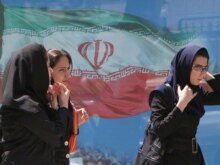
Iran --  Iranian women pass a billboard of Iran's national flag at a street in Tehran, 23Apr2007
Bracing for the clampdown?
(epa)
Thursday, December 13, 2007

From Radio Free Europe / Radio Liberty


To 23-year-old Tehran resident Setareh, the onset of winter and an accompanying crackdown to enforce the dress code mean one thing: Beware the bare ankles.

Last year, Setareh went for a winter stroll through the streets of Tehran. She quickly ended up behind bars. "Police stopped me because my trousers were slightly short and my ankles were showing," Setareh, who asked that her surname not be used, told RFE/RL by telephone from the Iranian capital. "I was walking with my male friend. The police said to him: 'She has a lax-dressing problem. We are taking her to the police station.'"

Setareh was thrown in a detention area with several other women, aged between 20 and 40. She says police were insulting and rude, but that she was finally freed after her mother arrived with her documents. "My mom pledged I wouldn't violate the dress code any more," she said.

This week in Tehran and other cities, officials began a fresh crackdown on women -- and men -- who violate rules for winter garb, such as sporting overcoats that are too short or hats instead of head scarves. Police in Tehran have set up mobile centers and stationed cars in busy areas, such as bustling Valiasr Street, to implement a new phase in the enforcement of the dress code.

"Boots that are worn over pants, also hats worn without head scarves, body-hugging clothes, and coats that are shorter than knee-length will be targeted," General Ahmad Reza Radan, Tehran's police chief, told reporters at the launch of the winter campaign on December 9. "And these rules should also be obeyed when [women] are in their cars."

Radan added that cars will be stopped and their female occupants inspected to make sure that they are not violating the winter dress code while inside their cars. He also warned the owners of restaurants, cafes, and stores to ensure that their customers do not violate the dress code; otherwise the owners will face consequences.

Wintertime First

Iranians have been informed about the police operation through an advertising campaign on radio and television. Billboards dot the streets warning women to dress properly. But it is the first time police have launched a winter crackdown on what is called "lax dressing" or noncompliance with Iran's strict Islamic dress code.

The crackdown has been gaining in intensity under President Mahmud Ahmadinejad, and hit a new peak this past summer. But the "morality police" have traditionally targeted women whose small head scarves reveal a portion of their hair or pants that do not cover their ankles. Such women are given a warning and forced to write a pledge that they will no longer dress "immodestly." The police sometimes fine or briefly arrest those who argue with them.

Rezwan Moqaddam, a Tehran-based women's rights activist, says many Iranians believe police should focus on problems more important than dress. "There are many other social issues in society," Moqaddam said. "There are men who bother and harass women on the streets, people who bother others on the streets at night, and drug traffickers and those who spread drugs among young people and create societal problems. The police should be tackling those issues."

Iran's state-run media recently reported on an opinion poll that purportedly showed that more than 80 percent of Iranians favor strict enforcement of a dress code. But Moqaddam said that police interference in personal matters such as their clothes has angered many Iranians, especially young people. She says such campaigns will only backfire on the government.

Longer-Term Impact

Farid Modarres, an independent political analyst in Tehran, says that since the 1979 Islamic Revolution, the Islamic dress code is just one of many social restrictions and pressures that Iranians have been putting up with. While such restrictions are widely resented, he believes it is unlikely that such pressure will trigger any immediate protests.

"As far as I understand Iranian society, I don't think that the day after such measures [as the dress code crackdown] some kind of radical protest will take place," Modarres told RFE/RL. "This matter -- along with many other social, political, and cultural issues where we have restrictions -- will have an impact in the middle- and long-term future."

Although the winter campaign focuses on women, men are not exempt. Police forbade them from wearing short-sleeved shirts, having tattoos, plucking their eyebrows, or using hair gel. And last summer, police reportedly inspected hundreds of barbershops in Tehran cautioning barbers who offer Western hairstyles and facial cosmetics for men.

Ali Hussein, a young Iranian living in Dubai, told RFE/RL's Radio Farda that during a trip to Iran he was stopped by a police officer who fined him for "wearing a tattoo -- and therefore harming his own body."

Despite opposition to the restrictions, authorities have vowed that the crackdown will continue through winter. And this time, they have pledged to root out what they consider un-Islamic dress "completely."

For Setareh, that could mean another run-in with police this winter, as she refuses to be cowed by such warnings.

"I'll keep dressing the way I want to," she said.